Passion week timeline: Jesus' trial, crucifixion, death and resurrection explained
As the ministry of Jesus of Nazareth draws to a close, things change. What had unfolded over years now focuses on days. Teaching gives way to confrontation. Public admiration turns into suspicion and hostility. Moments of quiet instruction with His disciples are increasingly set against open resistance from religious leaders and growing concern from Roman authorities.
Jesus enters Jerusalem at the height of Passover, when the city is full of pilgrims commemorating Israel's deliverance from slavery in Egypt. Everything about this final week is deliberate - from the manner of His arrival, echoing Zechariah's vision of a king who comes humbly (Zech 9:9), to His actions in the Temple, to His repeated warnings about what lay ahead. What unfolds is not a sudden tragedy that catches Jesus off guard, but the culmination of a mission He has been moving toward from the beginning - the reconciliation of humanity to God. These final days bring His identity into sharp focus. He is welcomed as a king and rejected as a threat. He teaches openly in the Temple while predicting its destruction. He shares a final meal with his closest followers, while one of them quietly prepares to betray him. Each scene carries weight and each decision advances events toward an outcome that was never accidental.
The Gospel writers devote more attention to this single week than to most of Jesus' earlier life combined. By placing these events side by side, they invite readers to see how prophecy, human choice and divine purpose converge. The result is not a collection of disconnected stories, but a coherent sequence that moves steadily from public ministry to private suffering and finally to death - followed by vindication. Drawing from all four Gospels, this timeline aims to present the events as clearly and carefully as possible, noting where each account contributes unique perspective.
The goal is not merely to retell a familiar story, but to understand how these days fit together - historically and theologically - and more importantly and why they stand at the center of who Jesus is and what He came to do. For those willing to read attentively, the Passion Week offers more than a record of events. It presents a sustained, purposeful movement of what Jesus did to reconcile humanity to God, carried out in full view of history.
Timeline of the Passion week
Yom Shishi - Friday prior
Anointing at Bethany: Preparation for burial
Scripture Reference Joh 12:1–8, Mat 26:6–13
Six days before Passover, Jesus returned to Bethany, the village where He had recently raised Lazarus from the dead. During a meal in His honor, a woman - identified by John as Mary, the sister of Martha and Lazarus, approached Him with an alabaster jar of costly perfume. Breaking it open, she poured it over His feet, wiping them with her hair. (Joh 12:1–3). The perfume she used was extraordinarily valuable, worth nearly a year's wages. Some of those present reacted with indignation, suggesting it could have been sold and the money given to the poor. John notes that this objection came from Judas Iscariot - not out of concern for the needy, but from self-interest (Joh 12:6). The scene presents a stark contrast in responses to Jesus: extravagant devotion on one side, calculated restraint on the other. Jesus immediately defended Mary, interpreting her act in a way few were prepared to hear. "She has done this in preparation for my burial" (Joh 12:7). Even His disciples struggled to grasp the significance of what was unfolding. Mary, however, appears to have recognized a reality that others had not yet fully faced - the cost of what lay ahead.
The anointing at Bethany carries layers of meaning deeply rooted in Jewish tradition. In Israel, anointing with oil or perfume served several purposes: kings and priests were set apart for service, and the dead were prepared for burial (Exo 30:22–33, Mar 14:8). In Mary's action, these themes converge. Honor and consecration intersect with suffering and mortality. The fact that this anointing takes place just before Passover is significant. As households prepared the Passover lamb in remembrance of God's deliverance in Exodus 12, Jesus is being prepared - quietly and deliberately - for His own sacrifice. In this light, Mary's act anticipates Jesus as the ultimate Passover Lamb, whose death would inaugurate a new covenant (Isa 53:7, 1 Cor 5:7). Her actions also echo long-standing prophetic expectations of the Messiah being appointed and honored for God's purposes (Psa 2:6, Isa 61:1–3). Without public declaration or theological explanation, Mary responds in a way that is both personal and visible - recognizing who Jesus is and what His mission entails.
Jesus adds a final note of significance - wherever the gospel is proclaimed, her act will be remembered (Joh 12:8). In doing so, He frames her response as enduring - not because of the perfume, but because her worship is aligned with the purposes of God.
When many withdrew or misunderstood this event, only one person responded with trust and devotion, offering something costly that could not be taken back.
How do I respond to Jesus?
Yom Rishon - Sunday
The triumphal entry: How palm Sunday fulfilled the prophecy of Zechariah 9:9
Scripture Reference Mat 21:1–11, Mar 11:1–10, Luk 19:28–40, Joh 12:12–19
After years of teaching and public signs, Jesus approached Jerusalem - the religious and political heart of first century Judaism. Passover was near, bringing with it collective memories of liberation, longing and hope. For generations, Israel had rehearsed the story of deliverance from Egypt and many wondered whether God might act again in their own time. This was the atmosphere into which Jesus entered (Mat 21:1–11, Mar 11:1–10, Luk 19:28–40, Joh 12:12–19).
Jesus and His disciples approached the city from Bethany via the Mount of Olives. In the Hebrew Scriptures, the Mount of Olives was associated with the coming of the Lord and messianic expectation (Zech. 14:4). From there, Jesus entered Jerusalem riding on a donkey. This is deliberate, because in the ancient world, kings rode horses when coming to wage war (or returning from conquest), but donkeys when arriving in peace. By choosing this means of entry, Jesus made a public statement of the kind of kingdom He was bringing. In doing so, He fulfilled a prophecy spoken by Zechariah roughly six centuries earlier, "Rejoice greatly, O daughter of Zion! Shout aloud, O daughter of Jerusalem! Behold, your king is coming to you; righteous and having salvation is he, humble and mounted on a donkey, on a colt, the foal of a donkey…" (Zech 9:9).
The crowds sensed the significance of the moment. They spread their cloaks along the road, waved palm branches and cried out, "Hosanna" - a plea meaning 'save us now'. Their words come from Psalms 118, a psalm closely associated with messianic hope. Many believed that God's long-awaited deliverer had arrived. John later observes that even Jesus' own disciples did not fully understand what was happening at the time, only recognizing afterward how precisely these events aligned with Scripture.
The Triumphal Entry challenges the idea that Jesus was merely misunderstood or passively swept into events beyond His control. Instead, He openly presents Himself as Israel's promised King; while redefining kingship itself. Where the crowds expected political liberation, Jesus embodies a kingdom characterized by humility, sacrifice and obedience to God's will. Luke records that Jesus weeps over Jerusalem, recognizing that many would welcome Him for what they hoped He would do, rather than for who He truly was - and that many would miss the things that make for peace (Luk 19:42). Jesus accepts public acclaim while fully aware that it will soon give way to rejection. He does not silence the crowd's messianic language, yet He reshapes its meaning. His kingship will not be established by force, but through Him paying the price for us at the cross.
Like the crowds, it is possible to praise Jesus while resisting the nature of His rule.
Do we seek Jesus Christ primarily for deliverance on our own terms or are we willing to follow a King whose path is marked by humility, obedience and self-giving love?
To follow Christ is to relinquish expectations of control and comfort, allowing His authority to shape values, priorities and daily decisions.
Greeks seek Jesus: The arrival of the gentiles and the hour of glory
Scripture Reference Joh 12:20–36
This passage in the Gospel of John functions as a turning point. Up to this point, Jesus has repeatedly said that "His hour had not yet come." Here, for the first time, He announces that it has. The trigger is strikingly revealing, "Now there were some Greeks among those who went up to worship at the feast." These were almost certainly Gentile "God-fearers," drawn to Israel's God who came to Jerusalem for Passover.
Passover was already a crowded and politically charged week. The presence of Greeks seeking Jesus meant that His influence had crossed ethnic and cultural boundaries at the very moment when Jewish hopes for national deliverance were intensifying. Jesus' response reframes those hopes entirely. Rather than organizing or resisting Rome, he speaks of death. "The hour has come for the Son of Man to be glorified," He says, immediately explaining what He means by glory through a familiar agricultural metaphor, "Unless a grain of wheat falls into the earth and dies, it remains alone; but if it dies, it bears much fruit" (Joh 12:24). In first-century Judea, this image needed no explanation. Life comes through apparent loss. Jesus applies it first to himself, then - quietly and unavoidably - to his followers, "Whoever loves his life loses it and whoever hates his life in this world will keep it for eternal life" (Joh 12:25).
John then records a rare moment - a voice from heaven. Unlike the Synoptic Gospels, which place divine affirmation at Jesus' baptism and transfiguration, John places it here, just days before the crucifixion. Some hear thunder; others think an angel has spoken. The also reflects a familiar biblical pattern - God's self-disclosure comes close enough to be heard, yet not so forceful as to compel belief. Jesus explains that the voice was not for His sake, but for theirs. History is reaching a turning point.
That moment is described with prophetic density. "Now is the judgment of this world; now will the ruler of this world be cast out. And I, when I am lifted up from the earth, will draw all people to Myself" (Joh 12:31–32). John adds that Jesus said this "to show by what kind of death he was going to die." The phrase "lifted up" echoes Isaiah's Suffering Servant (Isa 52:13) and recalls the bronze serpent lifted by Moses in the wilderness (Num 21), an image Jesus had already applied to Himself earlier (Joh 3:14). What appears to be defeat will become the means of healing and reconciliation - extending beyond Israel to all people - including the Greeks whose request prompted this moment.
Jesus concludes with a warning and an invitation, "The light is among you for a little while longer. Walk while you have the light." Historically, this is a sober reminder that Jesus' public ministry was brief and finite. Personally, it carries the same weight.
The grain of wheat does not disappear when it falls into the ground - it multiplies. In Joh 12, on the threshold of the cross, Jesus presents that pattern not as an abstract, but as reality itself.
Light, once recognized, calls for response. Not triumphalism, but trust. Not self-preservation, but a willingness to let go and entrust life to Him.
Yom Sheni - Monday
The fig tree: The symbolic judgment on unfruitful religion
Scripture Reference Mat 21:18–22 Mar 11:12–21
The following morning, as Jesus and His disciples left Bethany and returned toward Jerusalem, Jesus became hungry. Along the road He saw a fig tree in leaf - its appearance suggested fruit, but on closer inspection there was none. Mark notes that it was not the season for figs, yet Jesus spoke a judgment over the tree, saying that no one would ever eat fruit from it again (Mar 11:14). At first glance, this appears puzzling, even severe. However, when viewed within its historical, agricultural and prophetic context, its meaning is clear. In Israel, fig trees often produced small early figs before the full harvest. A tree covered in leaves would normally indicate at least some edible fruit. This tree, however, promised life outwardly while producing nothing inwardly - its appearance did not match its reality.
Throughout Israel's Scriptures, the fig tree frequently symbolized the nation itself. Prophets such as Jeremiah and Hosea described Israel as God's fig tree - planted, cultivated and expected to bear fruit (Jer 8:13, Hos 9:10). By speaking this judgment, Jesus was not responding to hunger alone; He was delivering a visible, prophetic sign of spiritual barrenness concealed beneath religious appearance.
Mark structures this event around the cleansing of the temple. The cursing of the fig tree occurs before Jesus enters the temple and its withering is observed afterward. When the disciples pass it again, they see that it has withered from the roots (Mar 11:20). The judgment is complete - not superficial. What lacks true life at the core cannot endure, no matter how impressive it appears on the surface.
Jesus then uses the moment to teach His disciples about faith, prayer and trust in God (Mar 11:22–24). Yet beneath the lesson lies a sobering warning. Religious life can be busy, structured and outwardly impressive while lacking the fruit God desires. Proximity to holy things is not the same as faithfulness. Activity is not the same as obedience.
The fig tree account presses a question that extends beyond its original setting. It is not spectacle or performance, but a life that reflects genuine trust in God.
The tree did not fail because it lacked leaves, but because it lacked fruit. It stands as a silent witness, reminding us that outward signs mean very little if they are not matched by inward reality of bearing fruit like God desires.
The cleansing of the temple: Jesus reclaims His Father's house
Scripture Reference Mat 21:12–17 Mar 11:15–19 Luk 19:45–48
Upon entering Jerusalem, Jesus went first to the temple - the heart of Israel's worship and most visible symbol of its old covenant. What He encountered there was familiar, yet deeply troubling. The outer courts were crowded with merchants and money changers. Animals approved for sacrifice were being sold and Roman or Greek currency exchanged for temple coinage. These practices were not inherently improper; they were meant to assist pilgrims who had traveled long distances. Over time, however, provision had given way to exploitation. The activity had overtaken the Court of the Gentiles - the only place where non-Jews could draw near to Israel's God. What was intended as a space of prayer had become noisy, crowded and transactional. Access to worship was being obstructed and attention had shifted from devotion to profit. Jesus responded decisively. He overturned the tables of the moneychangers, drove out those buying and selling and declared, "My house shall be called a house of prayer, but you have made it a den of thieves" (Mat 21:13).
By drawing from Isa 56:7 and Jer 7:11, Jesus placed His actions firmly within Israel's prophetic tradition. Jeremiah had used those words while warning a people who trusted in the temple's presence while neglecting the purpose of worship itself. Jesus echoed that warning here. The issue was not commerce alone, but the corruption of worship and the exclusion of those seeking God. This was not an impulsive outburst. It was a deliberate act of authority. Jesus did not confront Roman power or attempt to dismantle the priesthood, yet His actions struck at the heart of the religious system. To cleanse the temple was to claim authority over it - an authority that, in Israel's Scriptures, belonged to God alone. The religious leaders recognized this immediately and it sharpened their resolve against Him (Mar 11:18).
The Gospels record a telling contrast in the aftermath. Children cried out in praise while the authorities were indignant (Mat 21:15–16). Those with influence felt threatened; those without status responded freely. Jesus welcomed the children's praise and continued teaching and healing within the temple, restoring it (if only briefly), to its intended purpose. The cleansing of the temple stands alongside the lesson of the fig tree that follows. God desires worship that is alive rather than empty, sincere rather than performative and open to all who come seeking Him.
True worship flows from a heart and a life cleansed, aligned and yielded to God's presence within.
Structures, traditions and rituals have value only insofar as they serve that purpose. When they become substitutes for genuine worship, they stand under judgment.
God's temple today: The spiritual meaning of the cleansed temple
The New Testament describes a significant shift in how God's presence is understood. God no longer dwells in temples or other buildings made with hands, but His dwelling is now in His people - it's personal. Writing to a community of new believers, Paul puts it simply, "Do you not know that your body is the temple of the Holy Spirit who is in you, whom you have from God?" (1 Cor 6:19). Through Christ, the place where God meets humanity is no longer confined to stone walls in Jerusalem, but found in the lives of those who belong to Him.
The prophets had spoken of this long before. Isaiah wrote of a Servant who would not merely address outward failure, but bear its weight, "Surely He has borne our griefs and carried our sorrows… by His stripes we are healed…" (Isa 53:4–5). Matthew later connects Jesus' healing ministry directly to this promise, noting that He healed the sick "that it might be fulfilled which was spoken by Isaiah the prophet" (Mat 8:16–17). Peter, writing with the cross in view, echoes the same truth, "Who Himself bore our sins in His own body on the tree… by whose stripes you were healed" (1 Pet 2:24).
Taken together, these passages present a consistent picture. Jesus' mission was not limited to addressing guilt alone, but aimed at restoring what sin had fractured - physically, spiritually and relationally. He bore the punishment so that we would not have to endure the effects of sin, including sickness and affliction.
If Jesus was willing to confront and cleanse the physical temple because it belonged to God, it raises a natural question. Why would He treat differently the dwelling place He now inhabits? Sickness and pain, like the corruption He drove from the temple courts, are not neutral features of God's presence but signs of what does not belong there.
Jesus did not ignore what diminished the purpose of God's dwelling - whether in stone or in people. Just as He acted to restore the temple to what it was meant to be; on the cross He made provision for wholeness in the temples He now inhabits - us! Because of Christ's finished work, we are not called to tolerate sickness, manage it spiritually or counsel it as though it belongs in God's dwelling place.
We are called to treat it exactly the way Jesus did - He cast sickness out, rebuked it and healed all without hesitation. The same Lord who drove corruption from the temple now dwells within us by His Spirit and His will has not changed!
Yom Shlishi - Tuesday
Jesus' authority challenged: Opposition from religious leaders
Scripture Reference Mat 21:23–27, Mar 11:27–33, Luk 20:1–8
In the wake of the temple cleansing, Jesus' actions demanded a response. As He taught openly in the temple courts, the chief priests, scribes and elders approached Him with a pointed question, "By what authority are You doing these things?" (Mat 21:23). This was a challenge, not a request for clarification. In first century Judaism, authority was typically traced through recognized institutions - formal training, priestly lineage or sanctioned appointment. Jesus possessed none of these. He held no priestly office, carried no rabbinic credentials and operated outside established structures. Yet He taught publicly, acted decisively and had just disrupted the temple marketplace as one who assumed unquestioned authority.
Jesus responded with a question of His own, directing them to John the Baptist. John had been widely recognized as a prophet, calling Israel to repentance in preparation for God's coming reign. If John's authority came from God, then Jesus' authority stood in continuity with it. If it did not, the leaders risked alienating a people who regarded John as genuine. Faced with this dilemma, being caught between truth and self-preservation, they declined to answer.
Jesus' refusal to press the matter further is instructive. Authority, in this moment, is not defended through argument, but revealed through consistency, faithfulness and truth. Historically, this exchange reflects a growing divide between institutional religion and the lived hope of Israel. Throughout Israel's Scriptures, prophets were often resisted precisely because they challenged those in power rather than affirming them. In this confrontation, Jesus stands firmly within that tradition - fulfilling the expectation of a prophet who would expose corruption instead of accommodating it.
Authority is not only about credentials but about alignment with truth. Jesus does not coerce belief; He exposes motives. This question also invites honest self-examination - do we reject uncomfortable truth because it threatens our position or do we follow it even when it costs us certainty?
Jesus' authority does not demand submission through force. It invites trust through consistency, courage and truthfulness.
His final public teaching: Confronting taxes, resurrection and the greatest commandment
Scripture Reference Mat 21:23–23:39, Mar 11:27–12:44, Luk 20:1–21:4
What follows is a series of parables that together form Jesus' final public teaching. Through parables, He speaks of tenants who reject a landowner's son, of invitations refused and of stewardship that carries real accountability. Each parable builds on the last, forming a sustained picture of responsibility, rejection and approaching judgment. The religious leaders recognize that these words are aimed squarely at them, while the surrounding crowds continue to listen attentively. These teachings are delivered in Jerusalem, within the temple courts, under the realities of Roman occupation and in direct confrontation with Israel's leadership. Jesus is not offering general moral insight for that period in history; He is interpreting Israel's story at a decisive moment and placing Himself unmistakably within it.
The atmosphere is tense. Jesus has entered Jerusalem in a manner that evokes messianic expectation, has cleansed the temple and has been publicly challenged by the chief priests and elders regarding His authority. Rather than answering them directly, He responds with parables drawn from Israel's Scriptures, everyday agricultural life and the prophetic tradition. For His original hearers, the meaning would have been difficult to miss.
The first is the parable of the two sons (Mat 21:28–32) A father asks both sons to work in his vineyard. One refuses but later goes; the other agrees but does nothing. Jesus applies this story to Israel's leaders, contrasting their verbal obedience with the genuine repentance of tax collectors and sinners. Historically, this echoes a familiar prophetic concern - outward religiosity without inward faithfulness (Isa 29:13). The surprise is not that sinners are welcomed, but that they respond, while those most confident in their standing do not. Jesus reframes righteousness, not as inherited status or spoken loyalty, but as a lived response to God.
The confrontation deepens in the parable of the wicked vinedressers (Mat 21:33–46) Drawing directly from Isaiah's depiction of Israel as God's vineyard (Isa 5), Jesus tells of a landowner who sends servants and finally his son to collect fruit, only for them to be beaten and killed by the tenants. The symbolism would have been unmistakable to a first-century audience. The servants represent the prophets, long resisted by Israel's leaders. The son points beyond metaphor to Jesus Himself. When Jesus asks what the landowner will do, His listeners unwittingly pronounce judgment upon themselves. Historically, the parable situates Jesus within Israel's prophetic timeline while anticipating His rejection and death. It also gestures toward the widening of God's covenant purposes, "The kingdom of God will be taken away from you and given to a people producing its fruits" (Mat 21:43). This is not a departure from Israel's Scriptures, but their fulfillment, echoing Psalms 118:22, "The stone the builders rejected has become the cornerstone."
The pattern concludes with the Parable of the Wedding Feast Mat 22:1–14, A king invites guests to celebrate his son's wedding, but they refuse the invitation and mistreat his messengers. Judgment follows and the invitation is extended more broadly, to all who can be found. Historically, this reflects first-century expectations of a messianic banquet and once again highlights human response to divine invitation. The unsettling final image - a guest without the provided wedding garments - serves as a sober reminder that participation in God's kingdom involves transformation, not mere proximity.
Together, these parables form a coherent warning and invitation. They explain why Jesus was rejected, why that rejection fits Israel's history; and why His mission extends beyond a single group of people. Within a generation, Jerusalem would fall (70 AD), lending historical gravity to Jesus' closing lament, "How often would I have gathered your children together… and you were not willing" (Mat 23:37).
Do words of belief translate into lived response? Am I open to correction or invested in preserving control?
Fruitfulness, in Jesus' teaching, is not perfection but responsiveness - listening, turning and trusting when God speaks.
God's invitation is generous, persistent and costly - and what matters most is not proximity to religion or traditions; but readiness to respond when the Son stands before us.
Taxes to Caesar: Understanding Jesus's command on church and state
Scripture Reference Mat 22:15–22, Mar 12:13–17, Luk 20:20–26
The question about paying taxes to Caesar was carefully crafted to trap Jesus. Rome's presence in Judea was deeply resented and the poll tax had become a visible reminder of foreign domination. If Jesus endorsed the tax, He risked appearing disloyal to Israel. If He rejected it, He could be reported to Roman authorities as a political agitator. That the Pharisees and Herodians - groups normally opposed to one another - joined forces in this moment underscores how threatening Jesus had become. His teaching cut across familiar categories and neither side knew how to contain Him.
Jesus' response was disarmingly direct. He asked for a denarius and drew attention out the image stamped on it. "Render therefore to Caesar the things that are Caesar's and to God the things that are God's" (Mar 12:7). In the ancient world (just as it is now), an image signified ownership. By pointing to Caesar's image on the coin, Jesus acknowledged a limited civic obligation, while implicitly reminding His hearers that human beings bear a different image altogether.
Historically, this answer reflects a Jewish conviction of God's ultimate sovereignty. Earthly rulers exercise real authority, but only within boundaries set by God. Israel's prophets had long spoken of a God who raises up kings and brings them down, remaining Lord over all history. Jesus avoids the trap not through evasion, but by placing political allegiance within a larger theological frame. The fulfillment of expectation here is subtle but significant. Israel's Scriptures anticipated a Messiah who would restore God's reign without relying on violence or coercion. In this exchange, Jesus embodies that vision - refusing both armed resistance and quiet accommodation and pointing instead to a kingdom that operates on different terms altogether.
Jesus acknowledges civic responsibility without allowing it to define ultimate allegiance.
Coins bore Caesar's image; people bear God's image. The question is not merely what we owe the state, but what we owe God. Since human beings bear God's image, the deeper call is personal.
What parts of our lives are we withholding from the One to whom we ultimately belong?
The God of the living: Why Jesus disputed the Sadducees on the resurrection
Scripture Reference Mar 12:18–27, Luk 20:27–40
The Sadducees, a priestly group who denied the resurrection, approached Jesus with a hypothetical. Drawing on the law of levirate marriage, they offered a scenario so exaggerated that it reduced the idea of resurrection to an apparent absurdity. Their purpose was not to explore the question, but to dismiss it.
Jesus' response addressed both their assumptions and their use of Scripture. He told them they misunderstood both the power of God and the meaning of the Scriptures. He then quoted Exodus 3:6, where God identifies Himself the God of Abraham, Isaac and Jacob - speaking centuries after their deaths. The implication is understated but significant. God refers to the patriarchs not as figures of the past, but as those who still stand in relationship with Him. As Jesus concludes, God "is not the God of the dead, but of the living."
Historically, belief in resurrection was debated within Judaism. The Pharisees affirmed it; the Sadducees rejected it. Jesus' appeal is not to philosophical speculation, nor to Greek notions of the soul's immortality, but to Israel's own Scriptures. Resurrection, as He presents it, is not escape from the physical world, but God's faithful restoration of embodied life. It reflects a view of God who redeems creation rather than abandoning it.
The passage also anticipates Jesus' own resurrection, which is the central foundation of the Christian faith. While Jesus does not argue the point here, His teaching assumes a God whose power extends beyond death itself and is faithful to His Word.
Faith in resurrection rests not on human logic, but on the faithfulness of God.
For us, it reframes how we think about death and continuity. Life is not defined solely by biological limits. If God remains in relationship with His people beyond death, then present choices carry lasting significance.
So, where will I spend eternity?
The greatest commandment: The heart of the law revealed
Scripture Reference Mar 12:28–34, Luk 10:25–28
When asked which commandment was greatest, Jesus responded by quoting Israel's most familiar confession of faith, the Shema, "…love the Lord your God with all your heart, with all your soul, with all your mind and with all your strength…." He then joined it with a command from Leviticus, "Love your neighbor as yourself." Together, He said, these summed up the Law and the Prophets (Mar 12:28–34).
The elements themselves were not new, but Jesus' pairing and emphasis were striking. In a religious culture often shaped by detailed legal interpretation, He identified love as the unifying factor of obedience. The commandments were not present as ends in themselves but expressions of relationship - devotion toward God and responsibility to others. Historically, this echoes a recurring prophetic concern. Israel's prophets repeatedly emphasized mercy, justice and faithfulness over rituals. Jesus stands firmly in that tradition, presenting love not as sentiment but as allegiance and action.
The fulfillment here is found not only in Jesus' teaching, but in His life. Throughout His ministry, He demonstrated wholehearted devotion to God alongside tangible compassion for others. The Messiah was expected to renew Israel's obedience; and Jesus does so by clarifying its heart.
Love is not a replacement for obedience; it is the shape obedience was meant to take.
Jesus reduces faith to neither emotion nor rules, but binds devotion and action together.
Orient yourself toward God and let that orientation shape how you treat the people around you.
Faith is not reduced to emotion, but neither is it confined to doctrine alone. Loving God involves trust, attention and obedience. Loving others involves dignity, patience and responsibility. The two cannot be separated.
Whose son is the Messiah? Solving the Davidic lineage puzzle
Scripture Reference Mar 12:35–37, Luk 20:41–44
After responding to a series of hostile questions, Jesus posed one of His own to the Pharisses and teachers of the law. Quoting Psa 110, He asked how the Messiah could be both David's son and David's Lord. In ancient Jewish culture, lineage carried authority downward i.e., ancestors were honored above their descendants. Yet David speaks of the Messiah as his superior.
The question left His listeners silent. Not because the text was unfamiliar, but because its implications were unsettling. The Messiah could not be reduced to a political successor who simply restored David's throne. He would fulfill Davidic hopes, but in a way that exceeded them, occupying a role that transcended ordinary categories of kingship.
This moment also points forward. Jesus does not directly claim the title here, but the logic of the question presses toward that conclusion. His authority, teaching and actions already suggested it. The Scriptures themselves invite a more complex understanding of who the Messiah would be.
Jesus does not force an answer - He leaves space for honest recognition.
If the Messiah is more than a teacher or reformer, then encountering Him requires rethinking assumptions about power, leadership and God's involvement in history. The silence of His opponents becomes an invitation for honest consideration rather than debate, even for you and me.
Warning against hypocrisy: Jesus's seven woes to the pharisees
Scripture Reference Mat 23, Mar 12:38–40, Luk 20:45–47
Jesus' final public teaching takes the form of a sustained and searching warning against hypocrisy. Speaking openly to the crowds and to His disciples, He exposes a pattern of religious leadership that prized appearance over substance and visibility over integrity. The scribes and Pharisees sat "in Moses' seat" teaching the Law, yet their lives contradicted its heart. They placed heavy burdens on others while refusing to carry them themselves. Their authority was recognized, but their example rang hollow.
Jesus critique is not aimed at devotion or obedience itself, but at how both had been distorted. They tithed meticulously - even down to mint, dill and cumin - yet neglected the weightier elements of the law - justice, mercy and faithfulness. Precision had replaced compassion. Rule-keeping had eclipsed love. Their spirituality had become performative - long prayers offered for display, religious garments enlarged for recognition and positions of honor eagerly sought. What mattered most was not becoming righteous, but being seen as righteous.
Central to Jesus' teaching is the inside i.e., the heart and the inner life must be addressed before outward conformity has any meaning. The compares the leaders to cups and plates polished on the outside while remaining unclean within. They were like whitewashed tombs - beautiful outwardly, yet full of death and decay inside. The problem is not external piety, but internal neglect. True holiness flows from the heart outward. When the heart is untouched, outward conformity becomes deception. Jesus also calls them blind guides - skilled in technical distinctions yet unable to grasp the larger reality. They strain out gnats while swallowing camels, fixating over minor impurities while tolerating deep injustice. In claiming to honor the prophets, they reveal themselves as heirs of those who rejected them, repeating the same resistance to God's truth while insisting they would have acted differently. Their hypocrisy is not rooted in ignorance, but in refusal seeing enough to preserve power, yet unwilling to repent.
Historically, this critique is not an attack on Judaism itself, but on a particular pattern of leadership that had emerged within it. Similar warnings echo throughout Israel's prophetic tradition (and likewise in our lives today). Jesus stands firmly within that tradition, speaking as a prophet calling God's people back to covenant faithfulness. He does not dismiss the Law; He exposes how it has been emptied of its purpose. The repeated phrase "woe to you" echoes Old Testament judgment oracles, underscoring the gravity of what is at stake. Yet Matthew 23 does not end with anger, but with grief. Jesus laments over Jerusalem, longing to gather its people as a hen gathers her chicks under her wings. Judgment and compassion are held together. The warning is severe because the love is real. Prophetically, this moment anticipates the coming judgment on Jerusalem, which would occur within a generation (70 AD). It also reveals the Messiah's dual role as judge and shepherd - holding leaders accountable for the harm they cause, while expressing deep sorrow for the people led astray. The exposure of hypocrisy is not an end in itself, but a call to repentance before loss becomes final.
Hypocrisy is not the failure to be perfect, but the refusal to be honest. Jesus does not condemn weakness; He condemns pretense. His sharpest words are reserved not for sinners who know their need, but for the righteous who deny it.
Cleanliness begins on the inside - when the heart is transformed, outward obedience follows naturally. When the heart is ignored, outward religion becomes a mask. Hypocrisy is not limited to religious professionals. It appears wherever outward conformity replaces inward transformation.
The invitation is to humility, integrity and wholeness. Faith is not about appearing righteous, but about becoming whole. The call is not to abandon moral seriousness, but to anchor it in truth, sincerity and compassion - to let justice, mercy and faithfulness shape both the inside and the out.
Jesus sharpens this warning by addressing titles and spiritual authority directly. He instructs His disciples not to not to allow themselves to be called "Rabbi', 'Father" or "Teacher" in an ultimate sense, because there is only one true Teacher and one Father. This is not a dismissal of human leadership or instruction, but a decisive refusal to allow any person to take the place that belongs to God alone. Spiritual leaders may guide, serve and instruct, ** but they cannot mediate identity, forgiveness or relationship with God**. When authority becomes substitutive rather than supportive - when a human voice takes the place of direct dependence on God - devotion quietly shifts into dependency. The concern is not about respect or honor; it is about preventing replacement. True allegiance belongs to God first and all human authority must point toward, rather than stand in for, that relationship.
Jesus is not abolishing teachers or spiritual fathers; He is re-centering allegiance. When someone else occupies the place of ultimate authority, security or validation that belongs to God, they cease to be a guide and become an idol.
Idolatry is not only bowing to false gods - it is assigning godlike weight to human voices. Whether through unquestioned loyalty, fear of disapproval or spiritual dependence, what replaces direct relationship with God distorts faith.
Greatness in God's kingdom is not found in elevated titles or spiritual status, but in humility and service. "Whoever exalts himself will be humbled and whoever humbles himself will be exalted." Authentic leadership leads people toward God, not into itself - freeing consciences rather than binding them and cultivating maturity rather than control.
The Olivet discourse: Jesus's prophecy of the end times and the temple's destruction
Scripture Reference Mat 24, Mar 13, Luk 21:5–36
As Jesus left the temple, His disciples drew His attention to its massive stones and magnificent buildings. To them, the temple embodied permanence - the visible center of God's presence, national identity and religious life. Jesus' response challenged that assumption. He declared that the days were coming when not one stone would be left upon another. What appeared eternal would soon be dismantled. Sacred space could not protect a hardened heart.
Later, seated on the Mount of Olives overlooking Jerusalem, the disciples asked Him privately when these things would happen and what signs would mark their arrival. Jesus does not provide a neat chronological timetable. Instead, He offers a prophetic framework, one that calls for discernment, endurance and vigilance in the face of upheaval.
He begins with a warning against deception. False messiahs, false prophets and misplaced confidence would arise, leading many astray. Wars, rumors of wars, famines, earthquakes and social unrest would follow - not as immediate proof of immediate finality, but as signs that the present order was destabilizing. These events are described as "the beginning of birth pains," signaling that judgment and renewal unfold through struggle rather than sudden collapse. Persecution would accompany this period and faithfulness would come at a cost - even within families. Yet Jesus assures His followers that endurance matters - the one who remains faithful to the end will be saved. The gospel will be proclaimed widely, not as a guarantee of universal acceptance, but as a testimony before judgment.
At the heart of this teaching stands the destruction of Jerusalem and the temple - a decisive act of judgment fulfilled within a generation when Rome destroyed the city in 70 AD, under Roman General Titus. Jesus speaks with remarkable specificity - armies surrounding Jerusalem, the call to flee without delay, distress unmatched in its severity and the dismantling of the very structures the disciples believed could never fall. History records that these events unfolded precisely as Jesus foretold, underscoring His prophetic credibility, authority and His intimate knowledge of God's plan.
Yet Jesus' words extend beyond that immediate horizon. The near and the distant are held together. The destruction of the temple becomes both a historical fulfillment and a foreshadowing of a ultimate reckoning. He speaks of the coming of the Son of Man in glory and the gathering of the elect - the final accountability of all nations and powers before God. The collapse of the old order anticipates the full arrival of the kingdom that cannot be shaken.
Throughout the discourse, Jesus repeatedly redirects attention away from speculation to readiness. "Of that day and hour no one knows," He says - not even the disciples. The uncertainty is intentional. The proper response is watchfulness. Readiness is defined not by charts or predictions, but by faithfulness over time.
This emphasis is reinforced through a series of parables that follow: servants entrusted with responsibility, bridesmaids awaiting the bridegroom, stewards managing what belongs to another. Each parable underscores the same truth - accountability comes to those who have been given trust. Delay exposes character. The faithful servant continues his work even when the master seems absent; the unfaithful one assumes delay means exemption. Readiness, then, is not passive waiting, but active stewardship. It is living as though the future judgment already matters in the present. Compassion, justice, endurance and obedience become the marks of those who truly expect the King's return. Jesus does not promise escape from suffering, but clarity and purpose within it. History is moving toward accountability. Hope belongs to those who remain watchful.
The destruction of the temple stands as both fulfillment and warning - a reminder that God's patience does not negate His justice and that privilege does not replace obedience.
Readiness is measured by stewardship, not speculation. Those prepared for the end are those who live responsibly in the present.
Jesus' call to watchfulness is not fear-driven, but hope-filled. The future belongs not to those who predict it, but to those who trust Him through it. To watch is to remain faithful. To be ready is to live as though what we do now truly matters, simply because it does!
Yom Revi'i - Wednesday
This day unfolded under a growing sense of tension. While Jesus continued teaching His disciples preparing them for what lay immediately ahead - the religious authorities were quietly consolidating their plans and Judas was moving toward betrayal. Devotion and deception existed side by side. Some were leaning in, committing themselves more deeply to Jesus and His kingdom. One, however, chose a different path, exchanging loyalty for personal gain.
The Gospels preserve this contrast with striking clarity. Jesus calls for wholehearted allegiance, a life shaped by trust and obedience. Judas' decision exposes the cost of rejecting that call. His betrayal is not presented as an isolated act of treachery, but as the end result of misdirected desire - self-interest overtaking faithfulness. As the Passion approaches, this tension between devotion and self-preservation becomes impossible to ignore.
Parables on readiness
Scripture Reference Matthew 25
In the final days before His arrest, Jesus turns His attention to what it means to live in light of the coming kingdom. Through a series of parables, He speaks about readiness, responsibility and accountability. These are not abstract teachings. They are delivered in Jerusalem, under the shadow of the cross, to disciples who will soon be left to carry His mission forward.
The disciples would have felt the weight of these teachings. Jesus is preparing His followers for life after His departure. They were also the first ones hearing these lessons on stewardship, readiness and eternal judgment, all of which would have had direct bearing on their calling and future actions as they carried on Jesus' work. These parables speak first to the disciples, but they clearly reach beyond them. They describe what faithful response looks like for all who claim allegiance to the King. Jesus is calling them - and us - to lives shaped by the values of the kingdom, even when the future feels uncertain.
In the parable of the ten virgins (Mat 25:1–13), Jesus describes ten young women waiting for the arrival of a bridegroom. All are invited. All are waiting. Yet only five bring extra oil for their lamps. When the bridegroom arrives later than expected, the prepared enter the feast, while the unprepared are shut out.
Jesus draws from familiar Jewish wedding customs, where delays were common and celebrations often stretched late into the night. The uncertainty of timing is central to this parable. The wise virgins anticipate the delay and prepare accordingly. The foolish do not. The difference is not awareness, but readiness.
The parable speaks to the reality that Christ's return is certain, though its timing remains unknown. Those who are spiritually ready for Christ's return, are not merely waiting - they keep their faith alive and active. The foolish virgins, on the other hand, symbolize those who do not take Jesus' warnings seriously and are unprepared when the moment arrives - borrowed preparation is not enough.
Readiness in the kingdom isn't passive; it requires active preparation-nurturing faith, cultivating spiritual practices and remaining alert.
The oil represents the daily acts of faith and devotion that keep us connected to Christ.
Christ's return is certain, but the timing is unknown and our response matters. Do we live with the urgency and vigilance of those who anticipate the arrival of the Bridegroom?
In the parable of the talents (Mat 25:14–30), a master entrusts three servants with differing amounts of money (talents). Two invest what they have been given and are commended upon his return. The third, acting out of fear, hides his portion and is judged unfaithful and cast out.
In the ancient world, a talent represented a substantial sum - an entrusted resource, meant to be used wisely. This parable underscores the importance of faithful stewardship in the kingdom of God. Jesus uses this image to describe the responsibility that comes with being part of the kingdom. What God gives is not meant to be preserved untouched, but used faithfully.
The talents symbolize more than money - they point to abilities, resources and opportunities that God entrusts to each of us. He expects us to use them wisely and to produce fruit - whether that's serving others, building His kingdom or simply living out our faith; rather than hiding it out of fear, complacency or laziness.
This final parable of the sheep and the goats (Mat 25:31–46), shifts from readiness and stewardship to judgment. Jesus - the Son of Man, describes the future - the Final Judgment where humanity is separated as a shepherd separates sheep from goats.
This imagery would have been immediately recognizable. Sheep and goats often grazed together but were separated at night. Jesus uses this familiar practice to reveal an unsettling truth - the final distinction is not based on religious language or stated belief, but on what they did in this life. The sheep represent those who live out the values of the kingdom, actively serving others, especially the vulnerable - they are welcomed into eternal life because they fed the hungry, clothed the naked, visited the sick and imprisoned. The goats represent those who ignore these responsibilities and fail to live according to God's values - they are sent away into punishment for their failure to serve the least of these. Compassion, in this parable, is not optional. Service to "the least of these" is presented as service to Christ Himself. Following Christ is not just about what we believe, but how we live; by the way we treat the marginalized, sick, poor and oppressed. It's a reminder that our eternal destiny is closely tied to our actions in the world - particularly the way we reflect God's love to those around us.
Taken together, these three parables form a coherent vision of discipleship. They speak to life in the tension between the already and the not yet of the kingdom. Jesus calls us to be ready for His return - spiritually vigilant, faithful stewards of His gifts and compassionate servants to the world around us. The kingdom of God is not just a future event - it is something we live in now and participate in today.
Betrayal by Judas
Scripture Reference Matthew 26:1–16, Mar 14:1–2, Mar 14:10–11, Luk 22:1–6
The betrayal of Jesus by Judas Iscariot stands as one of the most sobering and consequential moments in the Gospels. It is a moment that reverberates through history, encapsulating both the heart-wrenching tragedy of betrayal and the fulfillment of ancient prophecies. At the heart of this event lies the sobering reality that one of Jesus' closest followers would ultimately turn against Him, setting in motion the events that would lead to Jesus' arrest, trial and crucifixion.
As the religious leaders look for a discreet way to seize Jesus, Judas approaches them and offers his cooperation. The agreement is chilling in its simplicity. He will betray Jesus for thirty pieces of silver (Mat 26:14–16). The amount itself carries historical weight. According to the Law of Moses, thirty shekels was the compensation required for the accidental death of a slave (Exo 21:32). The irony is difficult to miss. Jesus - the Savior of the world, the teacher crowds followed, the healer many trusted, the one proclaimed as Messiah - was valued at the price of a servant. Judas' betrayal is not just a personal failure; it is an indictment of how Jesus was seen by those in power - as a mere commodity, expendable and worth little in the eyes of those who sought their own gain.
Fulfillment of prophecy
Judas' actions were not an accident and it certainly didn't take God by surprise. It unfolds in continuity with the Old Testament prophecies that pointed to the coming of the Messiah. In Psa 41:9, David speaks of the anguish of betrayal by a trusted companion saying, "Even my close friend in whom I trusted, who ate my bread, has lifted his heel against me." The words capture a uniquely personal wound - the pain of treachery that comes not from an enemy, but from someone close. In the Gospels, this lament finds its fullest expression in Judas, who shared meals, ministry and daily life with Jesus. Similarly, Zec 11:12–13, speaks of thirty pieces of silver being the price of a betrayal, "So they weighed out for my wages thirty pieces of silver. And the Lord said to me, 'Throw it to the potter' - that princely price they set on me…" The prophecy not only anticipates the amount Judas receives, but exposes the deeper issue - the profound misjudgment of value. What is priceless is treated as disposable, reflecting the spiritual blindness of those who prided themselves on knowing the Scriptures.
The tragic irony of Judas
Judas' betrayal carries a weight of irony that the Gospels never minimize. He was not an outsider. He was one of the Twelve. He had witnessed the miracles, heard the teachings and shared in the life of the Savior. And yet, in his greed and disillusionment, he chose to betray the very One who had loved him unconditionally. It is a reminder of how deeply sin can take root in a heart that seems outwardly close to God. This event marks the beginning of the chain of events that would lead to the crucifixion of Christ. His betrayal marks the beginning of the sequence leading to the crucifixion. The Passion of Christ, which is the focal point of Christian faith, hinges on this moment of betrayal - through it, God's plan of salvation was set into motion.
Moreover, Judas's betrayal reveals the depths of human depravity. Jesus' death was not merely the result of Roman or Jewish political machinations; it was also the outcome of human sin - our collective rejection of God's love. Judas's actions show how even those who walk closely with Jesus can be tempted to betray Him, often for selfish reasons. If anything the Gospels invite readers to see not just a villain, but a mirror - to reflect on the brokenness of the world and our own need for redemption.
Judas's betrayal was motivated by a desire for thirty pieces of silver - a mere fraction of a fraction of what he had been given in his time with Jesus.
In a similar manner, are we willing to sell out for the things of this world - wealth, status, power - or do we truly value Christ above all?
The weight of small compromises
Judas's actions are also a reminder that betrayal doesn't always happen in a single dramatic instant. Often, it begins with small, private compromises. Luke notes that Judas had already opened himself to darker influences (Luk 22:3). John records that he had a history of dishonesty (Joh 12:6). Together, these details suggest a gradual erosion rather than a sudden collapse.
Betrayal often begins quietly. Small compromises, left unchecked, reshape priorities over time. By the time the decisive moment arrives, the direction of the heart has already been set. This progression serves as a warning to all of us - we must guard our hearts daily against small compromises that can lead us away from Christ.
The betrayal also teaches us about forgiveness. Yet even here, the Gospels emphasize Jesus' posture. Knowing what Judas would do, Jesus still shares a meal with him. He does not expose him publicly or withdraw His presence. Grace is offered, even in the shadow of betrayal. Christ's response to betrayal is not one of condemnation but of profound mercy. For those of us who may feel we have betrayed God or fallen short, there is hope. Christ's forgiveness is greater than any failure and His love is deeper than any betrayal. No sin is too great to be forgive - but the choice to accept that forgiveness, to turn away from the silver that entices us and return to the Savior, is ours alone to make.
As we reflect on the story of Judas's betrayal, it's crucial to look at this story as a mirror that reveals the inner workings of our own hearts - i.e., haven't we all done the same too? What do we consider worth holding onto?
It's quite easy to read about Judas and say that we would never do something like that but every time we choose comfort over obedience or popularity over trust or sin over surrender; that's betrayal too. It may look different but it comes from the same place. Putting anything above Jesus that is betrayal. Before we judge Judas, we have to look at our lives.
It is a call to examine where our loyalties lie. Do we, like Judas, trade the eternal for the temporary? Or do we hold fast to Christ, valuing His love above all things?
Judas's betrayal opens the way to the cross, where love and forgiveness are offered to the world. The question left for us is simple: how will we respond? If we run away like Judas we bring our own destruction; rather we should run to the cross and back to His love.
Yom Chamishi - Thursday
The last supper: Establishing the new covenant in blood
Scripture Reference Mat 26:17–30, Mar 14:12–26, Luk 22:7–23, Joh 13
On the evening of Passover, Jesus gathers His disciples in an upper room in Jerusalem to share a final meal. Passover was not a private religious exercise, but a national act of remembrance - retold each year to recall Israel's deliverance from slavery in Egypt. That rescue came through judgment and mercy, through sacrifice and through blood applied in faith (Exo 12).
Every element of the meal carried layers of meaning. Unleavened bread recalled haste and separation. Cups of wine marked God's promises to redeem His people. The lamb testified that freedom came at a cost. Into this well known story, formed by centuries of repetition, Jesus speaks words that do not discard its meaning, but bring it to completion.
Bread, body and self-giving love
Matthew records that during the meal, "Jesus took bread, blessed and broke it and gave it to the disciples" (Mat 26:26). When He says, "Take, eat; this is My body…," He is not offering metaphor alone - He is identifying Himself as the fulfillment of Passover itself.
In Egypt, the lamb died so judgment would pass over others. At the table, Jesus presents Himself as that Lamb. The initiative is unmistakably His. As John later records, "No one takes it from Me, but I lay it down of My own accord." (Joh 10:18). This reframes sacrifice in a way that was counter cultural then and remains so today. In the ancient world, power was demonstrated through dominance and self-preservation. Jesus speaks instead of surrender, "My body, given for you." Life, does not come through taking but through giving of self. He does not cling to His rights or assert His status. He willingly laid them down for us.
The cup and the new covenant: What Jesus meant by the 'fruit of the vine'
Jesus then takes the cup and declares, "for this is my blood of the covenant, which is poured out for many for the forgiveness of sins." (Mat 26:28). Throughout Scripture, covenants were always sealed with blood - a sign of both their seriousness and permanence. Blood represented life itself (Lev 17:11). More than six centuries earlier, the prophet Jeremiah had spoken of a coming covenant - not written on stone, but on human hearts; not sustained by repeated sacrifices, but grounded in forgiveness and inner renewal (Jer 31:31–34). By identifying His blood as the covenantal seal, Jesus was the means by which that promise is fulfilled.
The New Testament consistently returns to this theme. The blood of Jesus is not symbolic excess - it is the means of cleansing, healing and reconciliation (Heb 9:12–14). As explored in The Blood of Jesus and Healing, Scripture portrays His blood as life poured out to restore what sin has fractured - internally and relationally. Jesus offers His life so others might truly live.
A kingdom yet to come: Jesus's promise of a future feast
Matthew includes a detail that points beyond the cross, "I will not drink of this fruit of the vine from now on until that day when I drink it new with you in My Father's kingdom" (Mat 26:29). This meal is both an ending and a promise. Jesus acknowledges that suffering lies immediately ahead, but He frames it within hope. Death will not have the final word. The covenant He inaugurates will culminate not in loss, but in restoration. The Last Supper looks backward to the Exodus and forward to the kingdom - anchoring its meaning in both history and hope.
Betrayal and scattering: The prediction of the disciples' flight
The evening is also marked by tension. Jesus announces that one of those at the table will betray Him (Mat 26:21). Judas is present. Jesus does not withhold Himself until loyalty is secured. He offers His body and blood knowing rejection is already underway. After the meal, they sing a hymn - likely from the Hallel Psalms (Psa 113-118) - and walk toward the Mount of Olives. Along the way, Jesus tells them plainly, "All of you will be made to stumble because of Me this night" (Mat 26:31), quoting the prophet Zechariah, "I will strike the Shepherd and the sheep of the flock will be scattered" (Zech 13:7).
Peter protests, confident that his loyalty will not fail. Jesus responds with quiet clarity, "Before the rooster crows, you will deny Me three times" (Mat 26:34). This is not humiliation for its own sake. It is realism. Human resolve - even sincere resolve, is fragile when fear enters the equation.
The Gospels preserve these details because they matter. The early church did not sanitize the failures of its leaders. Instead, it testified to a story not built on heroic followers, but on a faithful Savior. The Last Supper reveals how Jesus understood His own death. He did not see it as a tragic interruption of His mission, but as its fulfillment. He deliberately placed His actions within Israel's story and fulfilled what the Scriptures had long anticipated - more than 350 prophecies woven across centuries. It also challenges how we understand sacrifice, loyalty and trust. Jesus gives Himself fully before the disciples prove faithful - and knowing they will fail. That pattern reframes how forgiveness, grace and commitment work in real life.
The Last Supper ends not with triumph, but with quiet resolve.
Bread broken. Wine poured. A covenant sealed.
A path set that will lead to life; because Jesus gave His life so that we might have life eternal with the Father.
The servant king: Why Jesus washed the disciples' feet
Scripture Reference Joh 13-15
John's Gospel pauses the Passover meal to describe an act that would have unsettled everyone in the room. Jesus rises, lays aside His outer garments, wraps Himself with a towel and begins to wash His disciples' feet. In the first-century world, this task belonged exclusively to servants - and usually the lowest ranking ones. A teacher would never perform it. A master certainly would not. Yet Jesus does.
The action is not spontaneous humility; it is intentional instruction. John makes clear that Jesus acts with full awareness of His authority, "Jesus, knowing that the Father had given all things into His hands…" (Joh 13:3). Secure authority allows for downward movement. This is servant leadership, not as a technique, but as an expression of character. Power, in Jesus' kingdom, is demonstrated through service. Historically, this moment confronts both ancient and modern assumptions of greatness. Rome prized dominance. Religious systems prized status. Jesus redefines leadership as responsibility for the good of others, even at personal cost. His words are simple, "For I have given you an example, that you should do as I have done to you" (Joh 13:15). The kingdom advances not through coercion, but through love expressed in action.
Jesus then turns from posture to connection.. "Abide in Me and I in you…" (Joh 15:4). The image of the vine and branches is not mystical abstraction; it is relational realism. Branches do not strive to produce fruit. They remain connected and fruit follows naturally. Disconnection leads to withering, not because of punishment, but because life cannot flow where connection is severed. Fruit does not create the connection; it reveals it! This teaching prepared the disciples for Jesus' physical absence. It also addresses a modern impulse to carry life alone and cautions against it.
Christianity does not begin with moral performance, but with relationship. Growth comes not from self-sufficiency, but from remaining connected to Christ. Abiding reframes faith as dependence before responsibility.
The mark of that relationship is love - visible, costly and patient. "By this all will know that you are My disciples" (Joh 13:35) i.e., not through arguments alone, but through lives shaped by the same humility displayed at the table.
The high priestly prayer: Jesus's final intercession in John 17
Scripture Reference Joh 17
Before leaving the city, Jesus prays. Not briefly, but deliberately. This prayer offers a rare glimpse into Jesus' self-understanding. He speaks as one sent, obedient and fully aligned with the Father's will.
He prays for His disciples' protection, unity and faithfulness. Then, remarkably, He prays for those who will believe through their message - future followers included! The scope is global and generational. Unity is not requested for comfort, but for witness, "that the world may believe…" (Joh 17:21). Here, Jesus stands as mediator - not distant, but engaged. Christianity does not claim a Savior who merely taught and withdrew, but one who actively intercedes. This prayer anticipates the Church's mission - it reassures us that faith rests not on human endurance alone, but on Christ's work.
Gethsemane: The agony in the garden and the sleeping disciples
Scripture Reference Mat 26:36–56, Mar 14:32–52, Luk 22:39–53, Joh 18:1–11
Thursday night of Passion Week brings us to Gethsemane, an olive grove just outside Jerusalem's eastern gate. After the Passover meal, Jesus leads His disciples across the Kidron Valley to a place He often visited to pray (Joh 18:1–2). Judas knows the location. Nothing about what follows is accidental. This moment matters historically because it shows Jesus knew of what the future held. The Gospels agree that He was not surprised or overpowered.
The sleeping disciples
Jesus leaves eight disciples at the edge of the grove and brings Peter, James and John deeper in. These are the same three who witnessed the Transfiguration - moments of glory - and now they are invited into His anguish. He tells them plainly, "My soul is exceedingly sorrowful, even to death" (Mat 26:38).
Luke, a physician by training, records that Jesus' sweat became "like great drops of blood falling down to the ground" (Luk 22:44). This is not poetic exaggeration. Hematidrosis is a rare but documented condition associated with extreme psychological stress. The body is reacting to a burden far heavier than fear of execution alone. Jesus prays that the cup might pass from Him - language rooted in the Hebrew Scriptures, where the cup often represents divine judgment (Isa 51:17, Jer 25:15). Yet He ends with, "Not My will, but Yours, be done" (Luk 22:42). What is striking is not that Jesus recoils from suffering, but that He submits to it. Where humanity has historically and consistently grasped for autonomy, Jesus relinquishes it.
What happens is that severe anxiety causes the release of chemicals that break down the capillaries in the sweat glands. As a result, there's a small amount of bleeding into these glands and the sweat comes out tinged with blood. What this did was set up the skin to be extremely fragile so that when Jesus was flogged by the Roman soldier the next day, his skin would be very, very sensitive.
Three times Jesus returns to find His closest followers asleep. This detail is uncomfortable, which is precisely why it carries historical credibility. The Gospel writers do not soften the failure of their own leaders. Exhaustion, confusion and fear overwhelm them. Jesus' gentle rebuke, "Could you not watch with Me one hour?" (Mat 26:40) - highlights a recurring theme in the Gospels - human weakness contrasted with divine faithfulness. Zechariah had foretold, "Strike the Shepherd and the sheep will be scattered" (Zech 13:7). That scattering begins here. It also shows that Jesus does not abandon them - or us - for weakness. He moves forward anyway.
The arrest: Why He chose not to call down legions of angels
Judas arrives with a detachment of soldiers and temple guards, armed with clubs and swords (Mar 14:43). This is not a quiet arrest; it is a show of force, suggesting the authorities expect resistance. Ironically, the only violence comes from Jesus' own side. Peter draws a sword and strikes the servant of the high priest, severing his ear (Joh 18:10). Jesus immediately intervenes. Luke alone records that He touches the man's ear and heals him (Luk 22:51). Even at the moment of His arrest, Jesus restores rather than destroys.
He then reframes the entire scene, "Do you think that I cannot now pray to My Father and He will provide Me with more than twelve legions of angels?" (Mat 26:53). A Roman legion numbered around 6000 soldiers. The point is not spectacle, but authority. Jesus is not overpowered; He is restrained by choice. The Gospel of John underscores this when Jesus steps forward and says, "I am He" - a phrase that echoes the divine name revealed in Exodus (Joh 18:5–6). The arresting party momentarily falls backward - control never leaves His hands.
Fulfillment of scripture: Understanding Matthew 26:56 and the prophetic plan
Every Gospel emphasizes that these events unfold "that the Scriptures might be fulfilled" (Mat 26:56). Jesus is bound like Isaac, betrayed like David, silent like the Suffering Servant of Isa 53. None of this is improvised. Gethsemane dismantles the idea that the crucifixion was a tragic accident or political miscalculation. Jesus foresees the outcome, rejects escape and forbids violence. This is not martyrdom forced upon Him - it is obedience embraced.
For the early Christian movement, this night explained why suffering did not invalidate Jesus' claims. If anything, it confirmed them. The Messiah was not avoiding pain but absorbing it. For us, Gethsemane speaks to how love, obedience and trust actually function. Love does not eliminate cost; it chooses who will bear it. Jesus does not pass suffering along - He takes it on Himself. In practical terms, it asks whether trust in God is conditional on comfort or whether it holds even when outcomes are uncertain.
Thursday night ends with Jesus alone, bound and led away. The disciples scatter into the dark. From a distance, it looks like collapse. Historically and theologically, it is the hinge on which everything turns.
What appears to be surrender is, in fact, the clearest expression of purpose.
Yom Shishi - Friday
Trials before Jewish and Roman authorities
Scripture Reference Mat 26:57–27:26, Mar 14:53–15:15, Luk 22:63–23:25, Joh 18:12–19:16
The trials of Jesus represent one of the most documented legal sequences in antiquity. For those approaching the New Testament from a skeptical or curious perspective, these events offer more than a religious story. They provide a window into the intersection of first-century Jewish leadership and Roman governance - two systems operating under pressure, with competing priorities and limited patience.
The Jewish leaders: The Sanhedrin at night
Jesus' arrest did not lead immediately to a public courtroom. It led into the shadows. After being seized in Gethsemane, Jesus was taken first to Annas, the former high priest and patriarchal power behind the current priestly leadership (Joh 18:12–13). Though Annas no longer officially held office, his influence remained substantial. From there, Jesus was brought to Caiaphas, the acting high priest, where members of the Sanhedrin were already assembling.
This gathering itself was irregular. Under Jewish law, capital trials were not to be conducted at night, nor on feast days and never concluded with a verdict on the same day proceedings began. These safeguards were designed to prevent haste, coercion and irreversible injustice - especially in matters of life and death. Yet every safeguard was set aside and this proceeding was not legal. The hearing took place after midnight, during Passover; and under clear urgency to secure a conviction before dawn (Mar 14:53–65). The reason soon becomes apparent. The council was not weighing evidence to discover truth; it was searching for testimony that would justify a verdict already decided.
Mark records that "many testified falsely against him, but their statements did not agree" (Mar 14:56). Jewish law required the consistent testimony of at least two witnesses to sustain a capital charge. Even in this controlled environment, the accusations collapsed. Some alleged that Jesus threatened to destroy the temple, but their accounts contradicted one another. The case stalled - not because Jesus was innocent in their eyes, but because they could not legally prove Him guilty.
The impasse broke only when Caiaphas abandoned pretense and placed Jesus under oath. "Are you the Messiah, the Son of the Blessed One?" (Mar 14:61). This was no longer a search for evidence. It was a demand for self-incrimination. Jesus had been largely silent until this moment. Now He answered plainly, "I am and you will see the Son of Man sitting at the right hand of the Mighty One and coming on the clouds of heaven" (Mar 14:62).
The response drew directly from Daniel 7:13–14, where the "Son of Man" is given eternal authority and worship by God Himself. Jesus was not merely affirming Messiahship - He was identifying Himself as the divine figure who would one day judge the very court standing before Him.
The reaction was immediate and violent. Caiaphas tore his garments - a symbolic gesture declaring blasphemy - and the council pronounced Jesus worthy of death. Some began to spit on Him. Others blindfolded Him, struck Him and mocked Him, "Prophesy, who was it that struck you?" (Mar 14:65). The irony is difficult to miss. Those entrusted with preserving Israel's law were breaking it, while the one they accused stood silent, restrained and resolute.
Peter's denials: A lesson in human frailty and restoration
While Jesus faced Israel's highest religious court, Peter sat warming himself by a fire in the courtyard below. Hours earlier, he had promised unwavering loyalty. Now, questioned by servants and bystanders, he denied knowing Jesus - once, twice and even a third time.
"I don't know this Man of whom you speak…" (Mar 14:71).
At that moment, the rooster crowed. Luke tells us that Jesus turned and looked at Peter (Luk 22:61). No rebuke is recorded. No words were exchanged. The look alone was enough. Peter left the courtyard and wept bitterly.
Side by side, the contrast is striking. Jesus stands faithful under false accusation. His closest follower collapses under the pressure of association. One is struck and mocked; the other is spared; and undone by it. The Gospel writers offer no commentary. They let the scene speak for itself.
The Romans: Before Pilate
By morning, the Sanhedrin had reached its goal. But it lacked the authority to carry out an
execution. Roman occupation had stripped Jewish leaders of the ius gladii i.e., the right of the
capital punishment, from the Jewish leadership. If Jesus were to be put to death, only Rome could
authorize it. So they brought Him to the Roman governor, Pontius Pilate.
The charge now changed. Blasphemy carried no weight with a Roman governor. Instead, Jesus was accused of political subversion - claiming kingship, stirring unrest and opposing Caesar (Luk 23:2).
Pilate questioned Him directly, "Are you the king of the Jews?" (Luk 23:3). Jesus' answer was measured. "You have said so." He offered no defense against the accusations and Pilate quickly discerned that this was not a genuine threat. Three times Pontius Pilate declared publicly, "I find no basis for a charge against this man" (Joh 18:38, Luk 23:4, 22).
Innocence, however, was not enough.
Pilate governed a volatile region and had already drawn criticism from Rome for mishandling Jewish affairs. When he learned Jesus was from Galilee, he seized an opportunity to shift responsibility and sent Him to Herod Antipas, the ruler of that region.
Herod's Curiosity: The shallow faith of a puppet king
Herod had long wanted to see Jesus - not out of faith, but fascination. Luke notes that he hoped to witness a sign (Luk 23:8). Jesus, however, said nothing. Herod questioned Him at length, but received no response.
Mocked and dressed in a robe of splendor, Jesus was sent back to Pilate. Herod found no guilt in Him either. Luke adds a quiet detail: Pilate and Herod, previously hostile toward one another, became friends that day (Luk 23:12). Unity was achieved not around truth, but around a shared dismissal of it.
Barabbas and the crowd: Why the people chose a rebel over the redeemer
With responsibility now squarely before him, Pilate attempted a compromise. It was customary during Passover to release a prisoner as a gesture of goodwill. Pilate presented the crowd with a choice: Jesus or Barabbas - a known insurrectionist and murderer.
The chief priests moved quickly among the people, persuading them to ask for Barabbas instead. Pilate pressed the question, "What shall I do, then, with the one you call the king of the Jews?" The reply came back unambiguous "Crucify him!" (Mar 15:12–13). At this point, even Pilate's household intervened. His wife sent a message urging him to have nothing to do with "that righteous man, Jesus" for she had suffered greatly in a dream because of Him (Mat 27:19). It was an unusual intrusion - Roman women rarely inserted themselves into judicial matters - but it underscores the growing tension. Every avenue Pilate pursued to release Jesus failed.
In a final, symbolic gesture, Pilate washed his hands before the crowd and declared, "I am innocent of this man's blood, It is your responsibility" (Mat 27:24). The response that followed has echoed through history - "His blood is on us and on our children!" (Mat 27:25). These words are not a warrant for blame against later generations, nor against Jewish people as a whole - Scripture itself rejects that reading (Ezek 18:20). Rather, the moment captures a tragic irony - a people longing for deliverance formally disown the very One sent to bring it.
Fearing unrest and political consequences, Pilate finally yielded. Jesus was ordered to be scourged and handed over for crucifixion.
Why this matters
Historically, the trials of Jesus reveal something difficult to dismiss. Both Jewish and Roman authorities examined Jesus under their respective systems of law. Neither established guilt. Again and again, those with power acknowledged His innocence - yet He was executed all the same.
This outcome did not catch Scripture off guard. Isaiah wrote of one who would be "pierced for our transgressions" and yet "assigned a grave with the wicked and with the rich in his death" (Isa 53:5–9). Psalms 2 speaks of rulers conspiring against the Lord's anointed. Daniel foresaw a kingdom taken not by force, but by divine decree.
Jesus was not swept along by events. He spoke when it mattered, remained silent when silence fulfilled prophecy and entrusted Himself to the Father's will rather than asserting His rights.
The Sanhedrin feared loss of authority. Pilate feared loss of stability. Herod sought entertainment. Peter feared association. Each reaction is recognizably human.
The question quietly posed is not only "Was Jesus innocent?" but "What do I do when following truth carries a cost?"
Do I value integrity over approval? Faithfulness over self-protection? Do I resisting the temptation to remain neutral when neutrality itself becomes a decision.
Pilate washed his hands, but history remembers the choice he made.
Crucifixion and death
Scripture Reference Mat 27:27–56, Mar 15:16–41, Luk 23:26–49, Joh 19:17–37
Scourging
Before His crucifixion, Jesus was subjected to Roman scourging, a severe and deliberately brutal form of punishment. This was not simply a preliminary act, but a punishment capable of leaving a person physically devastated or even causing death. Roman scourging varied in severity depending on the orders given and the disposition of the soldiers carrying it out. In Jesus' case, the Roman governor Pontius Pilate was trying to squelch a riot (Luk 23:22, Joh 19:4–6) and to appease the Jews, he wasn't holding back on Jesus. Yet, despite Jesus' mangled appearance, the crowd demanded more Crucify Him! The Gospels give little graphic detail, but historical records and Roman law provide insight into what Jesus suffered.
Roman scourging or flagellation, involved stripping the prisoner and tying him to a post. Soldiers then beat the victim with a flagrum - a multi-thonged whip embedded with pieces of bone and metal and meant to inflict as much damage as possible. Historical sources describe this punishment such that each lash tore into the skin, ripping flesh and muscle, sometimes even exposing bone or organs. For Jesus, who had already endured a sleepless night, betrayal, arrest and mockery, this punishment would have been excruciating. Isaiah 53:5 poignantly proclaims, He was wounded for our transgressions, He was bruised for our iniquities… and by His stripes we are healed. The stripes refer to the lashes He received - taken on behalf of the world's sin, bearing in His body the punishment due to others.

Roman Flagrum Photo by Rubén Betanzo S, via Wikimedia Commons, licensed under CC BY-SA 3.0

Whips were braided leather with small pieces of metal and sharp bone woven were commonly used. Such a device could easily cause disfigurement and serious trauma, such as ripping pieces of flesh from the body or loss of an eye. In addition to causing severe pain, the victim would approach a state of hypovolemic shock due to loss of blood.
The backs would be so shredded that at times the spine was left exposed by the deep cuts; and the whipping went anywhere from the shoulders and back down to the back of the legs! The early church historian (circa 3rd century) Eusebius wrote The veins were laid bare and the very muscles, sinews and bowels of the victim were open to exposure. Many people would die from this kind of beating even before they could be crucified, as hypovolemic shock sets in.
The crown of thorns
After the scourging, Roman soldiers placed a crown of thorns on Jesus' head as an act of mockery, intensifying His pain and humiliation. Popular history has the crown being in the shape of a simple circlet; however this is far from the truth. The actual crown of thorns was more like a cap that went all around his head (similar to the Imperial State Crown of Great Britain for example). The shroud of Turin has fifty holes where the crown was placed on Jesus's head - these were 3 inch Bethlehem thorns.
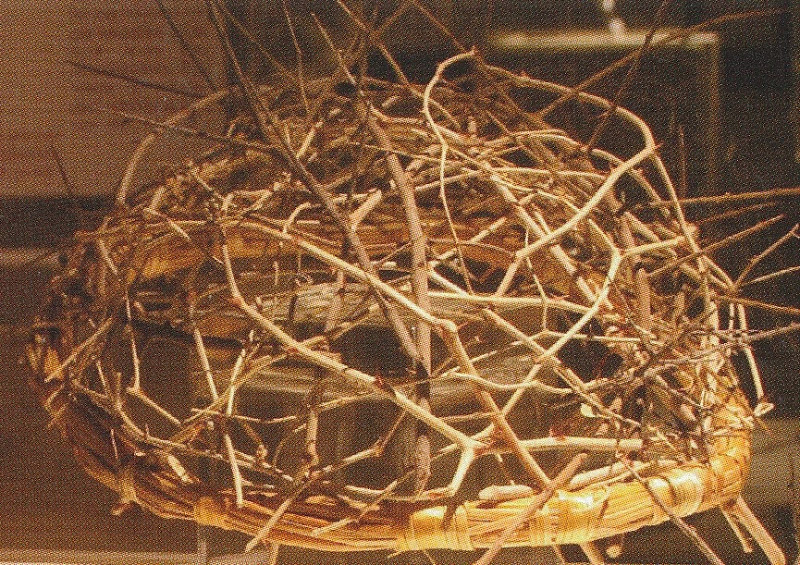
Image from Danin, A. (2010) Botany of the Shroud: The Story of Floral Images on the Shroud of Turin, p. 59. Danin Publishing: Jerusalem. Used under fair use for educational and commentary purposes.
The Shroud of Turin is often cited as supporting evidence, showing numerous wounds consistent with such a crown. Gospel accounts record that He stumbled while walking to Golgotha, expressed intense thirst while on the cross and required assistance carrying the cross. Medical analysis of Roman crucifixion practices suggests that Jesus was already in serious physical condition before the crucifixion itself began.
It is important to note that the crown was made by interweaving (plaiting) the thorn twigs into a shape of a cap. This placed a large number of thorns in contact with the entire top of the head, including the front, back and sides. The blows from the reed across Jesus' face or against the thorns would have directly irritated the nerves or activated zones along the lip, side of the nose or face, bringing severe pain resembling a hot poker or electric shock. The pain would have lacinated across the sides of his face or deep into His ears. Bleeding would have resulted in penetrating small red vessels where the pain may have stopped momentarily only to recur at the slightest movement of the jaw or even the wind. The traumatic shock from the brutal scourging would have been further enhanced by the paroxysmal pains across the face. Exacerbations and remissions of throbbing bolts of pain would have occurred all the way to Calvary and during the crucifixion; activated by movements of walking, falling, twisting; from the pressure of the thorns against the cross, from the many shoves and blows by the soldiers

Turin shroud positive and negative displaying original color information Photo by Dianelos Georgoudis, via Wikimedia Commons, licensed under CC BY-SA 3.0

A medical emergency; if left untreated, the insufficient blood flow can cause damage and failure of organs. Consists of the heart races to pump blood that isn't there and blood pressure drops causing collapse. The kidneys shut down to prevent loss of whatever fluid is left and the person is extremely thirsty to replace the lost fluids
In the accounts of Jesus Christ, He experienced every single one of these - when going up to Golgotha he staggered, fell and needed help to carry the cross. He cried out and said "I thirst" on the cross and was offered vinegar. Dr. Metherell adds Because of the terrible effects of this beating, there's no question that Jesus was already in serious to critical condition even before the nails were driven through his hands and feet
Beating and striking
In addition to formal punishment, Jesus was subjected to repeated physical abuse and mockery by both Jewish guards and Roman soldiers. After His arrest, He was blindfolded, struck, spat upon and taunted during questioning before the Sanhedrin (Mat 26:67–68, Mar 14:65, Luk 22:63–64). These actions were intended to degrade and humiliate Him, particularly by mocking His identity as the Messiah.
Under Roman custody, the abuse continued. The soldiers treated Him with contempt, striking Him and ridiculing Him as the "King of the Jews" (Joh 19:3). The cumulative effect of this mistreatment would have caused extensive bruising, swelling, bleeding and fractures in His face. The pain and disfigurement were part of fulfilling Isaiah 52:14, which says, His appearance was so disfigured beyond that of any human being and His form marred beyond human likeness.
Jesus bore this suffering voluntarily, absorbing the violence and hatred of humanity to offer peace and redemption. Every blow was an insult to His identity and mission, yet He endured it in silence - an image of divine humility and mercy.
Carrying the cross
Following the scourging and beatings, Jesus was required to carry His own crossbeam to Golgotha or 'the Place of the Skull' (Joh 19:17). This journey, traditionally called the Via Dolorosa or Way of Sorrow , led through crowded streets and covered a considerable distance. Already weakened from blood loss and exhaustion, Jesus struggled under the weight of the crossbeam. Each step was agony - the weight of the crossbeam, He stumbled and eventually collapsed. Concerned that He might not survive to reach the execution site, the soldiers compelled Simon of Cyrene to carry the cross behind Him (Luk 23:26).
Jesus carries the burden not only of wood, but of sin - the guilt, shame and rebellion of the world. The path to Golgotha was not just physical but spiritual. Jesus was walking toward His ultimate sacrifice, weighed down by human suffering and divine purpose. His sacrifice and submission to the Father's will - a love so great for us that it bore the heaviest burden of all.
The nails on the cross
As painful as what this was, Jesus had to endure so much more. The vertical beam would have been set in the ground already and the cross bar that Jesus was holding would need to be attached to it with Jesus on it. In order to do that He was laid down over the beam arms out stretched; and the Romans used tapered spikes that were 5 to 7 inches (13-18 cm) long (see illustration below) and driven into the wrists to support the weight of the body while hanging.
Paintings show pictures through the palms, that isn't true. It was through the wrists. This was a
solid position that would lock the hand; if the nails had been driven through the palms, his weight
would have caused the skin to tear and he would have fallen off the cross. So the nails went through
the wrists, although this was considered part of the hand in the language of the day. The pain of
crucifixion was so unbearable that words seemed inadequate to describe it. In fact, the term
excruciating comes from the Latin meaning out of the cross. The suffering was so intense that
language itself needed a new word to express the agony of the crucifixion.
At this point Jesus was hoisted as the crossbar was attached to the vertical stake and then nails
were driven through Jesus' feet. Again, the nerves in his feet would have been crushed and there
would have been a similar type of pain.

Nail & Heel Bone - Evidence of Crucifixion in Jerusalem 1st C. AD Photo by Gary Todd, via Wikimedia Commons, licensed under CC BY-SA 1.0

Next comes the intense agony of hanging on the cross itself.
First of all, his arms would have immediately been stretched, probably about six inches in length and both shoulders would have become dislocated - you can determine this with simple mathematical equations. This fulfilled the Old Testament prophecy in Psalms 22:14, My bones are out of joint and They pierced My hands and My feet; I can count all My bones., which foretold the crucifixion hundreds of years before it took place
Death itself
When someone is suspended upright during crucifixion, death comes slowly and painfully, primarily due to suffocation. This happens because the position places immense strain on the diaphragm and chest muscles, keeping the lungs in a state similar to inhalation. To exhale, the person must push up with their feet, briefly relieving the muscle tension. However, this action causes the nail to rip through the foot tissue until it is stopped by the tarsal bones. After exhaling, the body sinks back down to inhale once more. This cycle of pushing up to breathe and sinking back continues repeatedly, until the person is so fatigued they can no longer lift themselves to breathe - and eventually, breathing stops entirely.
As breathing became increasingly shallow, the individual would enter a state known as respiratory acidosis. In this state, carbon dioxide accumulates in the bloodstream, combining with water to form carbonic acid, which raises the blood's acidity. This chemical imbalance disrupts the heart's normal rhythm, leading to arrhythmia, just before succumbing to cardiac arrest.
Additionally, even prior to death, the severe blood loss would have triggered hypovolemic shock, keeping the heart racing in an effort to maintain circulation. This rapid heart rate would have further strained the cardiovascular system, likely leading to heart failure. Such a failure can cause fluid to accumulate around the heart (called pericardial effusion) and in the chest cavity around the lungs (called pleural effusion)
Jesus would have felt his heart faltering, signaling to Him that death was imminent - prompting Him to utter, Father, into your hands I commit my spirit just before He died!
The veil is torn: The significance of Jesus's final breath
Scripture Reference Mat 27:50–51, Mar 15:37–38, Luk 23:44–45
In Matthew, we read solemnly, "And behold, the veil of the temple was torn in two from top to bottom…" (Mat 27:50–51, Mar 15:37–38, Luk 23:44–45). This curtain in the Temple was the massive, richly woven barrier that hid the Holy of Holies - the most sacred place in the Jerusalem, where God's presence dwelt and where only the high priest could enter once a year with sacrificial blood for the people's sins. No ordinary curtain, it stood as the sign of separation between a holy God and sinful humanity.
That it was torn from top to bottom is truly telling - God Himself removed the barrier at the very moment Jesus died. Human hands could not have done this - if men had torn it, it would have begun below. This act declares that Jesus' once-for-all sacrifice fulfilled the Old Covenant sacrificial system and inaugurated a New Covenant access to God that no longer depends on temple ritual or human priestly mediation.
The writer of Hebrews, reflecting on this moment, makes the connection explicit, believers now have "boldness to enter the Most Holy Place by the blood of Jesus, by a new and living way which He has consecrated for us through the veil, that is, His flesh" (Heb 10:19–20). The barrier between us and God is not distance, ceremony or performance - but sin. Where once the high priest alone could approach God, every believer today is invited to draw near with confidence to the throne of grace, to pray, to repent, to rest in God's presence (Heb 4:16).
he torn veil stands as a historical witness to the completion of Jesus' redemptive work and as a lasting invitation to dwell in the presence of the living God through Him.
It calls us to, approach God directly in prayer with honesty and confidence, not ritual or pretense. It calls us to live as priests (1 Pet 2:9), interceding for others and reflecting God's mercy.
Treasure Christ's atoning work, remembering that our access rests not on our worth but on His finished work.
Prophecies fulfilled: How the crucifixion matches Psalm 22 and Isaiah 53
Long before the events of the Passion Week, the Scriptures bore witness to the suffering, death and vindication of the coming Messiah. Centuries before Jesus of Nazareth walked the earth, the prophets spoke of One who would be despised, rejected and pierced for the sake of others. Psalms 22, written around a millennium before the crucifixion, describes in striking detail the anguish that Jesus suffered - forsaken by God, mocked by onlookers, his hands and feet pierced, his garments divided by casting lots - elements that are unmistakably echoed in the Gospel accounts of Jesus' crucifixion.
Even more profoundly, Isaiah's "Suffering Servant" passage, written between 740–680 BC, describes a servant of God who suffers not for his own sins, but for the sins of others (Isa 52:13–53:12). This servant would be "pierced for our transgressions, crushed for our iniquities and numbered with transgressors," yet through His suffering would bring peace and justification to others. Isaiah's imagery anticipates not only the physical torment - the silent submission to punishment and the assignment of a grave with the rich - but also the atoning purpose of that suffering, portraying a sacrifice laid down for the sins of others. Christians in the early church saw this not as vague imagery but as precisely fulfilled events in the life, death and resurrection of Jesus Christ.
Beyond these central passages, other prophetic details emerge with remarkable specificity. Zechariah prophesied that "they will look on me, the one they have pierced," a prediction Christians understand fulfilled in the piercing of Jesus' side after his death on the cross. Likewise, the betrayal with thirty pieces of silver and the later purchase of a potter's field (Zech 11) are events recorded in the Gospel that precisely match prophetic word for word, centuries earlier.
The significance of these fulfillments rests not only in their number, commonly estimated at over 350, but in the historical and cultural framework that surrounds them. Many of these prophecies were written long before crucifixion was practiced by the Romans and well before the specific details of Jesus' trial and execution were conceivable to an Old Testament prophet. That such detailed description would later align with the Gospel accounts suggests only divine orchestration that transcends human planning or coincidence. Even secular scholars have noted that this passage reads strikingly like a post-crucifixion Christian text. Yet the Dead Sea Scrolls (dated to around 250 BC) contain copies of Isaiah that demonstrate these prophecies predate Jesus by more than seven centuries, while David's Psalm 22 reaches back nearly a millennium earlier.
In the early proclamation of the apostles, this deep alignment between prophecy and fulfillment was written not as retrofitted explanation but as evidence of God's sovereign plan revealed across generations. As Paul wrote, the gospel was promised beforehand through God's prophets in the Holy Scriptures, concerning His Son (Rom 1:1–4).
The fulfillment of messianic prophecies in Jesus' suffering, death and resurrection stand as a powerful testimony that the events of the Passion were not accidental but the culmination of divine authorship woven through Israel's sacred texts.
Burial: Joseph of Arimathea and the guarded tomb
Scripture Reference Mat 27:57–66, Mar 15:42–47, Luk 23:50–56, Joh 19:38–42
As evening approaches and the Sabbath draws near, a respected member of the Jewish council named Joseph of Arimathea steps forward. He goes directly to Pontius Pilate and requests the body of Jesus. The act is quiet, but courageous. Joseph is described as a good and righteous man who had not consented to the council's decision and who was himself waiting for the kingdom of God.
Pilate, surprised that Jesus had died so quickly, confirms His death with the centurion before granting permission for the burial. Joseph is joined by Nicodemus, the Pharisee who had once come to Jesus by night. Together, they prepare Jesus' body according to Jewish burial customs. Nicodemus brings a large mixture of myrrh and aloes - about seventy-five pounds - an extraordinary amount, suggesting both reverence and honor. The body is wrapped in clean linen cloths along with the spices, following the burial practices of the Jews. Time is limited. The Sabbath will begin at sundown. The burial must be completed before work is forbidden.
With urgency, yet with care, Jesus is placed in a new tomb cut out of rock - one that had never been used, located in a nearby garden. A large stone is rolled across the entrance to seal the tomb. Several women who had followed Jesus from Galilee - among them Mary Magdalene and Mary the mother of Jesus, watch closely. Their intention is practical and understated - they plan to return after the Sabbath to complete the burial with additional spices.
The following day, the chief priests and Pharisees go to Pilate with a lingering concern. They remember Jesus' words that He would rise again after three days. Fearing that His disciples might steal the body and claim a resurrection, they request that the tomb be secured. Pilate grants them guards (a 'guard' was a unit of sixteen armed soldiers). The tomb is officially sealed and Roman soldiers are stationed there to prevent interference.
The stone is in place. The seal is set. The guards stand watch.
Nothing more is said. The silence is intentional. Hope appears extinguished, expectations buried with the body of Jesus. The Messiah lies in a borrowed tomb, death seemingly victorious and the Sabbath begins.
And yet, this is not the end.
Yom Rishon - Sunday
In Jewish law and in the common speech of the first century, any portion of a day was counted as a full day and night. This method of timekeeping is known as "inclusive reckoning," helps clarify repeated statements that Jesus would rise on the third day.
- Day 1 (Friday): Jesus was buried before sunset. Although only part of the day remained, it was legally counted as the first day
- Day 2 (Saturday): The Sabbath, lasting from sunset on Friday to sunset on Saturday.
- Day 3 (Sunday): The resurrection took place after sunrise. Even though only part of the day had passed, it was legally counted as the third day.
For note, we also see the same pattern with Mordecai and Esther when she visits the king, on the third day (Est 4:15–5:2), not on the fourth day as we would suppose.
Resurrection
The empty tomb: Historical evidence for the Resurrection
Scripture Reference Mat 28:1–10, Mar 16:1–20, Luk 24:1–12, Joh 20:1–18
Early on the first day of the week, several women went to the tomb - Mary Magdalene, Mary the mother of James, Salome, Joanna and others (Mar 16:1, Luk 24:10). They found the stone rolled away and the tomb empty.
The empty tomb was not opened to allow Jesus out - He was spirit and could walk through walls (Joh 20:19–26)
It was opened so we could see in!
Mary Magdalene encountered Jesus first (Joh 20:11–18). Her initial confusion and fear give way to recognition only when Jesus speaks her name. This detail is personal and consistent across accounts. In the ancient world, where women's testimony was often dismissed - placing women at the center of the discovery is historically striking.
Overjoyed, she ran to Simon Peter and John, telling them the body was gone. Both men ran toward the tomb. John arrived first but hesitated at the entrance. Peter followed moments later and went straight in - a small but telling detail that reflects his temperament and the weight he carried. Peter was not running toward triumph. The last recorded interaction he had with Jesus before the crucifixion was his threefold denial. He was running toward unanswered grief, guilt and uncertainty.
Inside, Peter saw the burial cloths lying in place, with the face covering folded separately. These details matter. A grave robbery would have been hurried and chaotic. Instead, the scene suggests order and calm. John then entered, saw the same evidence; and began to believe - though, as John later admits, neither yet fully understood the Scriptures that the Messiah must rise from the dead (Joh 20:9). Peter left the tomb in silence. The empty grave confronted him with mystery, but not yet with resolution. The Gospel's candor about incomplete understanding strengthens its historical texture and adds more credibility of the account.
That resolution comes later, on the shore of the Sea of Galilee. The risen Jesus appears to His disciples and addresses Peter directly (Joh 21). Three times He asks, "Do you love Me?" - a deliberate parallel to Peter's three denials on the night of the trial. With each confession, Jesus restores him publicly and commissions him to shepherd His people. What Peter could not undo through regret is healed through forgiveness and calling. The resurrection is not only victory over death; it is restoration after failure.
Not only was Jesus not in the tomb, but He moved around the region! Jesus appeared repeatedly, in different settings, to individuals and groups. Paul later notes that more than five hundred witnesses were still a live when he wrote (1 Cor 15:3–8).
The tomb's emptiness is not disputed by Jesus's contemporaries, even his adversaries. The Jewish authorities, rather than producing the body to debunk the resurrection claims, spread a story that the disciples had stolen it (Mat 28:11–15). This attempt to explain away the empty tomb inadvertently confirms its reality. If the body were still in the tomb, there would be no need for such a fabrication.
Appearances of the risen Christ: Why the eyewitness accounts are credible
That same day, Jesus appeared to two disciples traveling on the road to Emmaus (Mar 16:12–13, Luk 24:13–32). They did not recognize Him at first. Only after He explained how Moses and the Prophets pointed to the Messiah - and then broke bread with them - were their eyes opened. The account is notable for what it emphasizes - not spectacle, but understanding. The resurrection is not an isolated miracle, but as the fulfillment of a long anticipated story.
Later that day, Jesus appeared to the disciples as a group. He showed them His wounds and ate in their presence, deliberately addressing fears that they were seeing a vision or apparition (Luk 24:36–43). Thomas was absent and voiced open doubt when told what had happened. When Jesus appeared again, He did not rebuke Thomas for questioning - He invited him to examine the evidence for himself (Joh 20:24–29).
Over the next forty days, Jesus appeared repeatedly to His followers (Act 1:3). These appearances included:
- Simon Peter, publicly restored after his denial (Luk 24:34, 1 Cor 15:5).
- James, Jesus' brother, who had previously been skeptical (Joh 7:5, 1 Cor 15:7).
- The Twelve, in multiple gatherings (Act 1:9–11, Luk 24:50–51).
- More than 500 people at once, many still alive when Paul wrote (1 Cor 15:6).
- The Apostle Paul himself saw the resurrected Jesus (1 Cor 15:8), which radically changed his life - he went from hating and persecuting followers of Christ; to becoming one himself - suffering beatings, stoning, imprisonment and ultimately death for his faith. Why? He met the resurrected Jesus Christ on the road to Damascus! Paul willingly gave up power, wealth and status as a Roman citizen to follow Jesus Christ!
These were not fleeting visions but shared experiences involving conversation, teaching and physical presence.
These accounts were not just story or legend, they are truth - they demonstrate the reality of Jesus' resurrection and His victory over death. That was the reason people were willing to be tortured and crucified, rather than recant their faith.
Even the Romans - who crucified Jesus - record His existence, death and resurrection. His followers spread across the empire, refusing to renounce their faith despite torture and execution. In Asia Minor and Rome, many were brutally killed or crucified, including being burned alive or fed to animals. If Jesus weren't real, what did they stand to gain by dying for Him?
Why the resurrection matters
The resurrection accounts present named individuals, recorded doubts and inconvenient details. They do not portray fearless heroes, but hesitant and uncertain witnesses who were convinced by what they believed they encountered. If Jesus truly rose from the dead, then His words about forgiveness, new life and restoration are grounded in reality. The same power that restored Peter from failure is offered to anyone willing to face the empty tomb honestly.
Belief did not come easily to the first witnesses. They questioned, hesitated and struggled to understand - yet they were convinced by what they saw. Christianity does not ask for unexamined faith, but for careful consideration of what occurred - and what best explains it. The path begins where it began for them: with a willingness to look, to ask and to weigh the evidence.
To live in light of the resurrection is to allow it to reshape how failure, hope and purpose are understood. Like Peter, people bring doubt and regret. And like Peter, they encounter not condemnation, but grace - and a call forward to tell others of the Good News.
The story does not ask to be rushed. It asks to be read, remembered and weighed - just as it was in the first century.
Great commission and ascension
Scripture Reference Matthew 28, Mar 16, Luk 24, Joh 20-21 Act 1:4–11,
After His resurrection, Jesus did not immediately depart. Acts records that He appeared to His followers over a period of forty days, "speaking of the things pertaining to the kingdom of God" (Act 1:3). These final weeks were not dramatic displays meant to impress crowds, but quiet, deliberate moments that anchored the disciples' understanding. The resurrection was not only something to be believed; it was something that would reshape how they understood their place in the world.
From here, the story only moves outward.
Authority and responsibility
Scripture Reference Matthew 28:16–20,
Jesus' final instructions are recorded most fully in Matthew's Gospel. Standing with His disciples, He declared, "All authority has been given to Me in heaven and on earth" (Mat 28:18). This statement carries historical and theological weight - in a world ruled by emperors and enforced by legions, Jesus had authority that transcended political power and geographic borders.
He then commissioned His followers, "Go therefore and make disciples of all the nations, baptizing them in the name of the Father and of the Son and of the Holy Spirit, teaching them to observe all things that I have commanded you." The scope is striking. The commission was not limited to one people, place or generation. It marked a turning point - a message intended for the world.
Just as notable is what the disciples were not told to do. They were not instructed to compel belief or enforce conformity. They were to teach, to baptize and to pass on what they themselves had received. The authority of their message did not rest in political power, but in testimony. That this charge was given to men who had recently doubted, fled and failed is central to the story. Their credibility did not come from moral perfection or personal strength, but from what they had witnessed. The message they carried was not an abstract philosophy, but an account of events they believed had altered the course of history forever.
Jesus concluded with a promise, "I am with you always, even to the end of the age." This assurance connects the resurrection to everyday life. The risen Christ is not portrayed as distant or symbolic, but as actively present with His followers as they live out what they have seen and heard.
A Departure with lasting meaning
Luke records that Jesus led His disciples to the Mount of Olives, blessed them and was taken up before their eyes (Luk 24:50–51, Act 1:9). The ascension is sometimes overlooked, yet it carries substantial meaning. It was witnessed by the same individuals who had spoken with Him, touched His wounds and eaten with Him after His resurrection. The event was not experienced as loss, but as completion.
Rather than signaling absence, the ascension marks fulfillment. Jesus' earthly ministry had reached its intended conclusion. He had fulfilled the Law and the Prophets, confronted suffering, conquered death and entrusted His message to eyewitnesses. The imagery echoes Old Testament passages such as Daniel 7:13–14, where the Son of Man receives authority and an everlasting kingdom.
The angels' words to the disciples are telling, "This same Jesus, who was taken up from you into heaven, will so come in like manner" (Act 1:11). The emphasis is continuity. The Jesus who taught, suffered, died and rose is the same Jesus who reigns - and who will return.
What this means for us today
For us, the Great Commission and the Ascension shift the resurrection from a past event to a present reality. Christianity rests not on a timeless idea or private spiritual insight, but on a historical claim that continues to shape lives and communities.
The commission invites ordinary people into the story. Just as the first witnesses were asked to speak truthfully about what they had seen, people today are invited to live in light of that same reality - marked by humility, integrity and hope rather than fear or coercion. Faith is not an escape from the world, but rather, engagement with it.
The ascension reminds us that Jesus' work did not end at the tomb. His resurrection points backward to fulfilled prophecy and forward to ongoing meaning. It affirms that suffering and death do not have the final word and that history itself is moving toward accountability and restoration.
The resurrection is not merely something to admire, but something to consider carefully. If Jesus truly rose and His authority beyond time and place - then His words deserve attention. The question is not only what happened, but how that event continues to invite reflection, trust and transformation.
The earliest witnesses did not begin by trying to change the world. They began by telling the truth about what they had seen. The rest followed naturally.
The truth will set you free! and whom the Son sets free is free indeed.
FAQ - The passion week
Was the trial of Jesus legal under Jewish law?
By the standards of the Mishnah, Jesus's trial before the Sanhedrin violated several legal requirements: it was held at night, during a sacred festival and involved a unanimous verdict of guilt which usually required a delay for mercy. These irregularities highlight that the proceedings were a 'kangaroo court' driven by political expediency rather than judicial justice. The illegal nature of the trial underscores the innocence of Jesus as the 'Lamb without blemish.'
Why is the tearing of the Temple Veil significant?
The tearing of the thick curtain that separated the Holy of Holies from the rest of the Temple symbolized that the barrier between God and man had been removed. This was not a human act, as the veil was torn from 'top to bottom,' signifying God's initiative in opening the way to His presence through Christ's sacrifice. It marked the end of the Old Covenant sacrificial system and the beginning of direct access to God for all believers.
What historical evidence exists for the Resurrection of Jesus?
The historical case for the Resurrection rests on several facts accepted by most scholars: the evidence from Roman historians,the empty tomb, the sudden transformation of the disciples from cowards to martyrs, multiple eyewitness accounts and the conversion of skeptics like James and Paul. The earliest creeds, dating within months of the event, declare the Resurrection, leaving no time for 'legend' to develop. These points suggest that the bodily resurrection is the most plausible explanation for the birth of the Christian movement.
Why did Jesus have to die by crucifixion specifically?
Crucifixion was not only the most painful form of Roman execution but also carried a specific spiritual stigma; Jewish law stated that 'anyone who is hung on a tree is under God's curse' (Deut 21:23). By dying this way, Jesus symbolically took the curse of the Law upon himself to redeem humanity. Additionally, the specific details of crucifixion - such as the piercing of hands and feet - uniquely fulfilled prophecies written centuries earlier in Psalm 22.
What is the significance of Jesus cursing the Fig Tree?
The cursing of the fig tree was an 'acted parable' representing God's judgment on Israel's religious leadership, which had the 'leaves' of religious profession but no 'fruit' of true righteousness. By placing this event immediately after the Triumphal Entry and alongside the Temple cleansing, Jesus demonstrated that outward religious shows without spiritual substance would not stand. It serves as a sober warning that God seeks authentic faith rather than just ritualistic performance.
How does Matthew 26:56 explain the abandonment of the disciples?
Matthew 26:56 notes that the disciples' flight fulfilled the 'scriptures of the prophets,' specifically Zechariah 13:7, which says, 'Strike the Shepherd and the sheep will be scattered.' By citing this, the Gospel shows that even the most painful part of the Passion–the desertion by his closest friends - was within God's sovereign foreknowledge. It reframes a moment of human failure as a confirmation of divine prophecy.
What was the legal issue behind the 'Taxes to Caesar' question?
The question about taxes was a trap designed to force Jesus into a binary choice: either support the Roman occupation (offending the Jewish people) or advocate for tax resistance (committing treason against Rome). Jesus's brilliant response, 'Render to Caesar the things that are Caesar's' - established a new framework for dual citizenship. He taught that believers have obligations to earthly governments but a primary, overarching allegiance to God.