Is the crucifixion of Jesus historically accurate?
Few events in ancient history have been examined more intensely than the crucifixion of Jesus Christ.
Some people assume the crucifixion is merely a religious story. Others wonder whether the Gospel accounts were exaggerated over time. Many skeptics ask whether there is any evidence outside the Bible that Jesus was truly executed.
But the historical evidence surrounding the crucifixion is far stronger than most people realize. Even non-Christian historians agree that Jesus of Nazareth was crucified under the Roman governor Pontius Pilate.
The deeper question is not merely whether the crucifixion happened - but what it means for you and me.
Key takeaways
- Many skeptics question whether Jesus was actually crucified because the event carries enormous spiritual and historical consequences.
- If the crucifixion never happened, Christianity collapses - which is why historians intensely examine the evidence.
- The crucifixion challenges modern assumptions about truth, morality, suffering, forgiveness and who Jesus claimed to be.
- Both Christian and non-Christian historical sources confirm that Jesus was executed by crucifixion under Pontius Pilate.
- The New Testament accounts align with known Roman crucifixion practices, eyewitness testimony and early historical records.
- The crucifixion matters because Jesus died to reconcile humanity with God through grace, not religious performance.
- The historical death of Jesus forces a personal question: if Jesus truly died and rose again, what does that mean for your life and eternity?
Did Jesus actually die on a cross or is it a myth?
Many modern skeptics approach the New Testament with naturalistic assumptions, automatically dismissing historical claims linked to the miraculous. Because Jesus' execution is inextricably tied to the subsequent claims of His resurrection, the crucifixion becomes a primary target for doubt. By questioning the historical reality of the cross, critics attempt to undermine the foundational event of the Christian faith, avoiding the heavy spiritual and philosophical implications that a real death and verified resurrection would demand.
Why do some historians question the crucifixion of Jesus?
Skepticism surrounding the crucifixion rarely stems from a lack of ancient data, but rather from the massive theological weight the event carries. Within secular and alternative religious circles, there is a distinct motivation to discredit the biblical records. If Jesus of Nazareth truly suffered a public Roman execution and died on the cross, the historical stage is perfectly set for the resurrection. If the death is a myth, then the resurrection is a non-issue. Consequently, critics often try to decouple the historical Jesus from the biblical records by suggesting the account was exaggerated or fabricated by overzealous followers.
Furthermore, a significant portion of modern doubt is born out of standard hyper-skepticism toward ancient religious texts. Many people assume that because the Gospels contain theological assertions and miracle accounts, their historical and geographical descriptions must be equally untrustworthy. This worldview operates on the premise that ancient writers were incapable of recording objective, sober historical facts.
Additionally, some alternative religious traditions - most notably Islam - deny the crucifixion occurred, suggesting instead that a substitute was used or that it was an illusion. These competing "narratives" filter down into popular culture, leading laypeople to believe that the historicity of the crucifixion is a matter of open debate among historians, when in reality, the secular academic consensus overwhelmingly affirms it.
Was crucifixion a real Roman method of execution?
Historically and archaeologically, there is absolutely no doubt that crucifixion was a primary,
highly systematic method of capital punishment utilized by the Roman Empire. Designed specifically
for slaves, rebels and the lowest classes of criminals, it was engineered not just to terminate
life, but to utterly maximize physical agony and public humiliation. The practice was so widespread
and horrific that notable Roman statesmen, such as Cicero, described it as the most cruel and
shameful penalty possible, arguing that the very word "cross" should be entirely removed from the
thoughts and eyes of Roman citizens. The pain of crucifixion was so unbearable that words seemed
inadequate to describe it. In fact, the term excruciating comes from the Latin meaning
out of the cross. The suffering was so intense that language itself needed a new word to express
the agony of the crucifixion.
The physical reality of this practice has been firmly solidified by archaeological discoveries. For instance, in 1968, archaeologists in Jerusalem uncovered the skeletal remains of a first-century crucifixion victim named Jehohanan. A heavy iron nail was still driven directly through his heel bone, providing indisputable physical evidence of the exact mechanics of Roman execution during the era of Pontius Pilate.
When we compare the brutal details preserved in secular Roman history with the biblical text, the alignment is striking. The Gospels detail the public scourging, the forcing of the victim to carry the crossbeam (patibulum), the driving of nails and the final asphyxiation or shock that caused death. The Gospel writers did not construct a mystical, idealized passing for Jesus; they recorded a historically precise, gritty and legally accurate depiction of a standard first-century Roman execution.
Did early Christians invent the story of Jesus being crucified?
From a cultural and historical standpoint, the idea that early Christians invented the crucifixion story is completely untenable. In the ancient Greco-Roman and Jewish worlds, a crucified messiah was an absolute contradiction in terms. For Jewish culture, Deuteronomy 21:23 explicitly declared that anyone hung on a tree was under God’s curse. To the Roman mind, worshiping an executed criminal was the height of absurdity. If the Gospel writers were fabricating a religion to gain converts and influence, inventing a leader who suffered the most shameful death imaginable would have been a catastrophic marketing failure.
Historians evaluate ancient claims using the Criterion of Embarrassment, which states that an author is highly unlikely to invent details that are deeply embarrassing to their cause. The crucifixion fits this criterion perfectly. Early anti-Christian polemics, such as the famous second-century Alexamenos graffito discovered in Rome, mocked Christians by depicting a man worshiping a donkey-headed figure on a cross. The historical reality of the cross was a massive stumbling block that the early church had to constantly defend.
Had the disciples invented a myth, they would have written a triumphant records of a military conqueror or a glorious translation into heaven. Instead, they consistently preached a crucified Savior. They recorded this scandalous detail for one simple, undeniable reason: it actually happened.
The logic is simple - if you're inventing a hero or a founding myth, you don't include details that make your leaders look like cowards or fools.
The New Testament is full of these "embarrassing" details. Peter, the leader of the early church, is recorded denying he even knew Jesus. The first witnesses to the resurrection were women - whose testimony was unfortunately not even legally valid in a 1st-century court of law. If the authors were "rigging" the system or polishing the record to gain followers, they would have scrubbed these details. The fact that they remain is a strong historical indicator that the authors were reporting what actually happened, rather than what was convenient for their cause.
What historical evidence is there for the crucifixion of Jesus?
The historical evidence for the crucifixion of Jesus is exceptionally robust, drawing from a diverse array of early Christian documents, hostile or neutral non-Christian historians, and physical archaeological discoveries. Rather than relying on a isolated religious text, historians synthesize multiple, independent lines of data that converge on the same conclusion. This multi-faceted historical record makes the execution of Jesus under Pontius Pilate one of the most securely established events of the ancient world.
What archaeological evidence exists for Roman crucifixion?
The historical alignment between independent Roman records, archaeological discoveries, and the Gospel accounts of the crucifixion is remarkably precise. Every phase of Jesus’ passion records corresponds exactly to first-century Roman legal and military protocols. Rather than writing a sanitized or idealized theological myth, the Gospel writers recorded a gritty, medically accurate depiction of a standard Roman execution.
The brutality of the Roman flagrum
Before a prisoner was ever led to the cross, Roman law typically mandated a severe pre-crucifixion
scourging known as the verberatio. This was not a disciplinary whipping; it was a brutal,
systematic stripping of human flesh designed to weaken the victim to the point of near-death,
accelerating their ultimate demise on the cross.
The instrument used was the flagrum (or flagellum), a short-handled whip featuring multiple leather
thongs. Deeply embedded into the ends of these leather strips were jagged pieces of bone and heavy,
dumbbell-shaped lead balls (plumbatae).

Roman Flagrum Photo by Rubén Betanzo S, via Wikimedia Commons, licensed under CC BY-SA 3.0

As Roman lictors violently struck the victim's back, shoulders, and legs, the lead weights caused deep, severe contusions and internal bruising, while the sharp bone fragments tore into the subcutaneous tissue. This process literally shredded the skeletal muscles, exposing underlying veins, arteries and sometimes even the ribs or spine. The historian Eusebius described the results of such scourging by noting that "the veins were laid bare and the very muscles, sinews and bowels of the victim were open to exposure." This level of trauma explains why many victims died at the pillar before ever reaching the cross.
The Gospels record that Pilate had Jesus scourged before handing Him over to be crucified. This immense physical trauma induces hypovolemic shock - a state of critical fluid and blood loss that causes the heart to race, blood pressure to drop, and intense, unquenchable thirst. This perfectly explains why Jesus was physically unable to carry His own cross the entire way to Golgotha, requiring the soldiers to conscript Simon of Cyrene to assist Him.
As breathing became increasingly shallow, the individual would enter a state known as respiratory acidosis. In this state, carbon dioxide accumulates in the bloodstream, combining with water to form carbonic acid, which raises the blood's acidity. This chemical imbalance disrupts the heart's normal rhythm, leading to arrhythmia, just before succumbing to cardiac arrest.
Additionally, even prior to death, the severe blood loss would have triggered hypovolemic shock, keeping the heart racing in an effort to maintain circulation. This rapid heart rate would have further strained the cardiovascular system, likely leading to heart failure. Such a failure can cause fluid to accumulate around the heart (called pericardial effusion) and in the chest cavity around the lungs (called pleural effusion)
The burden of the patibulum
Popular Christian art frequently depicts Jesus carrying a massive, fully assembled Latin cross on His shoulders through the streets of Jerusalem. However, historical and Roman records paint a different, far more precise picture.
In first-century Roman executions, the vertical post (the stipes) was usually permanently fixed in
the ground at the designated execution site outside the city walls. The condemned criminal was
forced to carry only the heavy horizontal crossbeam, known as the patibulum.
The patibulum was a massive wooden timber, typically weighing between 75 and 125 pounds. It was placed across the raw, bleeding shoulders of the scourged victim and securely tied to their outstretched arms.
The walk from the Roman Praetorium to Golgotha was a physical torment of its own. Every stumble or fall meant the full weight of the heavy timber would crash directly into the ground, violently wrenching the victim's arms and driving the rough wood directly into the open wounds left by the flagrum. The Gospel accounts track perfectly with this Roman methodology, detailing the procession out of the city gates to the place of execution.
The mechanics of nail placement
A common point of modern skepticism revolves around the physical placement of the nails. For centuries, traditional religious paintings placed the nails directly through the center of Jesus' palms. Skeptics correctly pointed out that the soft tissue of the hands cannot support the weight of a hanging human body; the flesh would simply tear through the nails, causing the body to fall from the cross.
However, modern archaeology and linguistics have fully resolved this apparent discrepancy. In the ancient world, the Greek word used in the Gospels for "hand" (cheir) was not anatomically restricted to the palm; it encompassed the entire forearm, wrist and hand as a single unit.
To secure a victim to the wood, Roman executioners drove heavy iron spikes, roughly five to seven inches long, directly through the wrist - specifically through the space between the radius and ulna, or through the carpal bones. This placement mechanically locked the hand in place against the wood using the sturdy bony architecture of the wrist.

Nail & Heel Bone - Evidence of Crucifixion in Jerusalem 1st C. AD Photo by Gary Todd, via Wikimedia Commons, licensed under CC BY-SA 1.0

Crucially, driving a nail through the wrist directly pierces or severely compresses the median nerve. This is the largest nerve leading to the hand, and striking it causes a blinding, white-hot agony akin to a lightning bolt of pain shooting up the arms, instantly causing the thumbs to violently contract inward toward the palms.
First of all, his arms would have immediately been stretched, probably about six inches in length and both shoulders would have become dislocated - you can determine this with simple mathematical equations. This fulfilled the Old Testament prophecy in Psalms 22, My bones are out of joint and They pierced My hands and My feet; I can count all My bones., which foretold the crucifixion hundreds of years before it took place
For the lower extremities, Roman practice was confirmed by the 1968 discovery of the heel bone of Jehohanan, a crucified contemporary of Jesus. The physical artifact shows a massive iron nail driven straight through the side of the calcaneus (heel bone), proving that the feet were securely pinned to the sides or front of the cross with devastating anatomical efficiency.
The crown of thorns
The Gospel records note that Roman soldiers plaited a "crown of thorns" and forced it onto Jesus' head as a mockery of His claim to be the "King of the Jews." While often illustrated as a neat, circular ring resembling a modern wreath; historical and forensic context indicates something far more sadistic.
The soldiers in the Jerusalem garrison were provincial troops who despised the local Jewish population. Their mockery of Jesus was a highly calculated, theatrical parody of the Roman Emperor’s divine laurel wreath or radiant corona.
To achieve this, they constructed a crude, helmet-like cap out of local thorn-bearing flora - most likely the Ziziphus spina-christi or Syrian Christ-thorn, which features stiff, razor-sharp thorns up to two inches long.
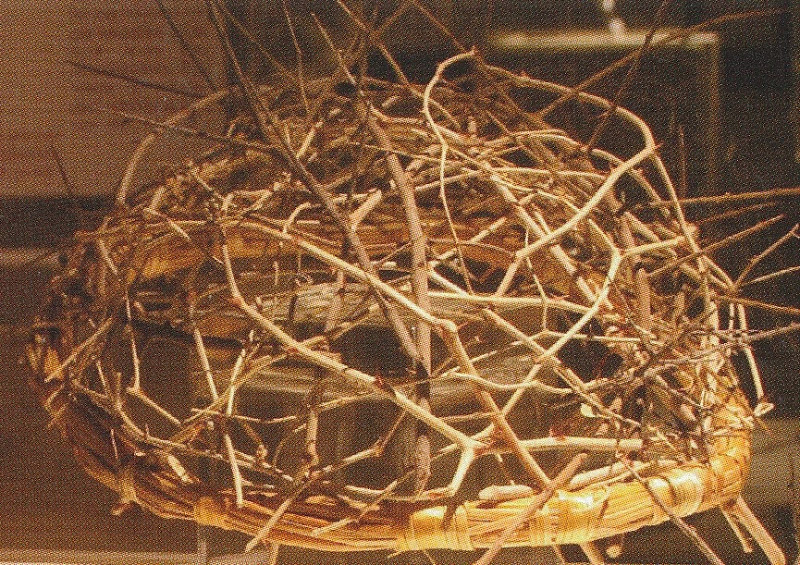
Image from Danin, A. (2010) Botany of the Shroud: The Story of Floral Images on the Shroud of Turin, p. 59. Danin Publishing: Jerusalem. Used under fair use for educational and commentary purposes.
When this thorny helmet was brutally smashed onto Jesus' head, the long spikes pierced the exceptionally dense network of blood vessels and nerves covering the human scalp. The scalp is one of the most vascular zones on the body; deep punctures here lead to profuse, unrelenting bleeding that would have covered His face, hair, and beard in deep crimson.
Furthermore, as the thorns pressed into the supraorbital and occipital nerves, they would trigger bouts of intense, shocking facial neuralgia with every movement of His head or jaw, compounding the psychological and physical torment before He ever reached the cross.
Public humiliation as state deterrent
Crucifixion was never designed to be a private, quiet affair; it was an instrument of state-sponsored psychological terror. The primary objective of the Roman Empire was not merely to kill the criminal, but to completely dismantle their dignity publicly, serving as a graphic, visual warning to anyone who dared defy the authority of Caesar.
To maximize this deterrent effect, executions were intentionally carried out in highly visible public spaces. In the case of Jesus, Golgotha was situated right outside the city walls of Jerusalem, immediately adjacent to a major, heavily trafficked public highway entering the city. This ensured that thousands of Passover pilgrims passing by would be forced to witness the gruesome spectacle.
Furthermore, the Romans stripped the victims completely naked, exposing them to total public exposure and vulnerability. Passersby, religious elites, and Roman guards would openly jeer, spit on and mock the dying men.
To ensure the public understood exactly why the criminal was being executed, Roman law required a titulus - a wooden board smeared with white gypsum and written in prominent black letters detailing the specific crime. This board was either carried ahead of the victim or hung directly above their head on the cross.
The Gospel of John explicitly notes that Pilate wrote Jesus’ titulus in three languages: Hebrew (the local religious tongue), Latin (the official language of the Roman state), and Greek (the universal language of commerce). This detail perfectly mirrors Roman administrative policies designed to ensure maximum communication of state power to a diverse, multi-ethnic population.
Analyzing the historical authenticity of the Shroud of Turin
The Shroud of Turin is a 14-foot linen cloth bearing the faint, anatomically perfect front and back images of a severely scourged and crucified man - remains the most intensely studied artifact in human history. Far from being debunked, recent scientific, medical and genetic developments have completely revitalized the debate over its authenticity, offering a staggering window into the raw physical mechanics of the crucifixion.

Full length negatives of the Shroud of Turin, via Wikimedia Commons, licensed under CC BY-SA 3.0

The DNA preprint and Levantine origins (2026)
In early 2026, geneticists, including researchers from the University of Padua, published a highly anticipated genomic and metagenomic analysis of the microscopic traces lifted from the Shroud during the historic 1978 STURP (The Shroud of Turin Research Project) examination. This 2026 DNA preprint revealed a complex mosaic of environmental exposures, but highlighted the definitive presence of the rare human mitochondrial DNA lineage H33. This specific haplogroup is exceedingly rare globally but prevalent in the Near East and the Levant, concentrated heavily among populations like the Druze, who share ancestral roots with ancient Levantine communities. Alongside this, the study identified localized microbiomes containing extremophilic archaea that thrive exclusively in hyper-saline environments, specifically mirroring the unique ecology found near the Dead Sea. This provides powerful genetic and environmental proof that the linen cloth was not manufactured or conceptualized in medieval Europe, but has genuine, deep-seated roots in the exact geographic region where Jesus was crucified.
The bas-relief vs real body debate (2024–2025)
Skeptics have long argued that the Shroud could be a clever medieval artwork, perhaps created by wrapping a cloth around a heated bas-relief statue or using a primitive photographic technique on a flat surface. However, comprehensive imaging studies conducted between 2024 and 2025 dealt a devastating blow to these forgery theories by focusing on the absolute lack of "flattening" or anatomical distortion on the back of the image.
When a heavy, limp human corpse is laid flat on a stone slab, the weight of the body naturally compresses and flattens the soft tissues of the buttocks, calves and shoulders. 3D mapping and high-resolution spatial analyses demonstrate that the Shroud image possesses perfect, un-distorted three-dimensional information.
The image intensity corresponds strictly to the distance between the cloth and the body at every single point. A medieval artisan attempting to forge this would have had to paint or scorch the cloth with mathematical variations down to the microscopic level without leaving any brushstrokes, directionality, or binding mediums - a feat impossible in the Middle Ages and completely unrepeatable by modern technology.
Forensic analysis of the inexplicable image
What makes the Shroud truly scientifically staggering is the physical nature of the image itself. It is a photographic negative encoded onto a cloth centuries before photography was invented. Forensic pathologists and physicists have verified that the image is not caused by pigment, dye, ink, vapors or chemicals. Instead, the image exists only on the topmost microscopic layer of the linen fibers - the carbohydrate layer - which has undergone an advanced form of dehydration and oxidation.
The leading scientific explanation among physicists is that the image was etched onto the fabric by a sudden, incredibly brief and intensely bright burst of radiant energy or vacuum ultraviolet light emitted uniformly from the body itself. This explosive release of light acted like an atomic camera, scorching the cloth instantly without burning through it, capturing a perfect anatomical blueprint of the man inside.
A full-body image encoded onto linen with microscopic precision centuries before cameras, lasers or atomic imaging even existed. No paint. No dye. No brushstrokes.
Just a momentary burst of energy so intense it appears to have imprinted the cloth at the molecular level - almost like the resurrection itself left behind a photographic negative for us today.
The medical reality of the wounds
The wounds on the Shroud mirror the biblical records with terrifying, forensic accuracy. The entire body is covered in over 120 dumbbell-shaped scourge marks, matching the exact pattern left by a Roman flagrum - a whip embedded with lead balls designed to tear flesh down to the bone. Pathologists note that the angle of the wounds shows two distinct men scourging the victim, one taller than the other.
Furthermore, the head wounds show that the "crown of thorns" was not a neat, ceremonial circlet as depicted in Western art. The blood flows on the scalp reveal a dense, painful "helmet" of long thorns pushed brutally down over the entire cranium, piercing the highly sensitive trigeminal and occipital nerves, causing profuse bleeding.

Turin shroud positive and negative displaying original color information Photo by Dianelos Georgoudis, via Wikimedia Commons, licensed under CC BY-SA 3.0

The blood itself is genuine human blood (type AB) containing highly elevated levels of bilirubin. This is a vital forensic detail: bilirubin spikes in the bloodstream only when a human being undergoes extreme, prolonged physical trauma and dehydration.
Most remarkably, the blood was deposited onto the cloth before the image was formed; there is absolutely no image beneath the blood stains, proving the cloth wrapped a real, bleeding human body before the inexplicable burst of light took place. Finally, the side wound reveals a post-mortem puncture matching a Roman lancea (spear), which pierced the right side of the chest, causing a distinct, separated flow of dense red blood cells and clear pericardial fluid–perfectly matching Joh 19:34 eyewitness description of "blood and water."
On the imprint of the long Sheet are also clearly visible a number of marks, falling all over the surface of the body, from the shoulders to the lower extremities of the legs: scholars interpreted those signs like the result of a terrible scourging, which was inflicted on the Man of the Shroud before crucifixion. The marks of flogging and crucifixion, like the great part of the wound marks visible on the cloth, strengthened the hypothesis of the identification of the Man of the Shroud with Jesus of Nazareth: the tortures suffered by the Man of the Shroud can be totally assimilated to the ones that, according to the Gospels, were inflicted on Jesus.
Do non-Christian historians mention the crucifixion of Jesus?
When evaluating the ancient past, secular historians place immense value on accounts written by neutral or hostile sources, as they have zero theological motivation to fabricate Christian claims. Jesus’ crucifixion is recorded by multiple first and second century non-Christian authors, providing crucial external validation for the Gospel accounts.
Tacitus: Senator and consul of Rome
Tacitus, born in 56 AD, is widely regarded as one of Rome's greatest historians. The most significant Roman reference to Jesus comes from Cornelius Tacitus, a prominent Roman senator, consul of Rome and historian. In his Annals, written around 116 AD, he covers events from the death of Augustus to Nero's reign, Tacitus references Jesus while describing Nero's brutal persecution of early Christians after the Great Fire of Rome. Importantly, there's no evidence of later tampering - his account stands as an authentic Roman record.
But all human efforts, all the lavish gifts of the emperor and the propitiations of the gods, did not banish the sinister belief that the conflagration was the result of an order. Consequently, to get rid of the report, Nero fastened the guilt and inflicted the most exquisite tortures on a class hated for their abominations, called Christians by the populace. Christus, from whom the name had its origin, suffered the extreme penalty during the reign of Tiberius at the hands of one of our procurators, Pontius Pilatus and a superstition, thus checked for the moment, again broke out not only in Judaea, the first source of the evil, but even in Rome, where all things hideous and shameful from every part of the world find their center and become popular. Accordingly, an arrest was first made of all who pleaded guilty; then, upon their information, an immense multitude was convicted, not so much of the crime of firing the city, as of hatred against mankind. Mockery of every sort was added to their deaths. Covered with the skins of beasts, they were torn by dogs and perished or were nailed to crosses or were doomed to the flames and burnt, to serve as a nightly illumination, when daylight had expired.
This passage is widely accepted by scholars as authentic. It confirms several key historical facts about Jesus such as His name, Christus (the Latinized form of Christ), His execution under Pontius Pilate, the Roman governor of Judea, It also details the origin of the Christian movement in Judea and its spread to Rome and the persecution of Christians for their allegiance to Christ.
Pliny the Younger: A Roman governor's inquiry
Pliny the Younger is another valuable Roman historical source for information on Jesus and the early Church. He was the governor of Bithynia and Pontus (modern day Turkey or Asia Minor as it is referred to in the New Testament) on the Black Sea coast of Anatolia. He was the representative of Emperor Trajan between 109 and 111 AD. He even writes to Emperor Trajan asking how he should deal with those in his region who are accused of being Christians. And in this letter he describes the practices of these 'criminals':
They were in the habit of meeting on a certain fixed day before it was light, when they sang in alternate verses a hymn to Christ, as to a god and bound themselves by a solemn oath, not to any wicked deeds, but never to commit any fraud, theft or adultery, never to falsify their word, nor deny a trust when they should be called upon to deliver it up; after which it was their custom to separate and then reassemble to partake of food - but food of an ordinary and innocent kind.
… I believe it all the more necessary to find out the truth from two slave women, whom they call deaconesses, even by torture. I found nothing but immoderate superstition …
The contagion of this superstition was spread not only through towns but also villages and even rural areas…
Pliny's account confirms that Christians worshiped Christ as God, maintained a high moral code and were numerous enough to pose a concern for Roman authorities. This letter indicates that within decades of Jesus' death, a distinct group identified by their worship of Christ was well-established.
Suetonius: Evidence of the 'Chrestus' disturbances
Another Roman historian, Suetonius, in his Life of Claudius[Emperor], mentions Jews being expelled from Rome:
He banished from Rome all the Jews, who were continually making disturbances at the instigation of one Chrestus (anointed one)
The 'disturbances' were Jews who trying to reconcile Jesus' divinity and the scandalous reports of his resurrection. Since the Jews couldn't agree, they were all expelled. This suggests Jesus' influence was felt even in the heart of the Roman Empire by the mid-1st century.
Flavius Josephus: Historian to three Roman emperors and chronicler of Judea
Josephus, one of the most respected Roman-Jewish historians of Judea, was born in 37 AD and died in 100 AD. While he was born a Jew, he later became a Roman citizen and had the backing of the Roman emperors (Vespasian, Titus and Domitian), Josephus had access to resources and was able to generate incredible detail in his records, far beyond what the Gospel writers (who lacked wealth) could achieve. It is because he served under the Roman emperors, his records were valued as authentic. Living shortly after Jesus and in the same region, his writings offer near eyewitness quality, offering insights into the era's cultural context. His major works, Jewish Antiquities and The Wars of the Jews, chronicle Hebrew history and the Roman destruction of Jerusalem and the fall of Masada in 73 AD.
[63] Now there was about this time Jesus, a wise man, if it be lawful to call him a man; for he was a doer of wonderful works, a teacher of such men as receive the truth with pleasure. He drew over to him both many of the Jews and many of the Gentiles. He was [the] Christ.
[64] And when Pilate, at the suggestion of the principal men among us, had condemned him to the cross, those that loved him at the first did not forsake him; for he appeared to them alive again the third day; as the divine prophets had foretold these and ten thousand other wonderful things concerning him. And the tribe of Christians, so named from him, are not extinct at this day.
This core passage confirms Jesus' existence, his reputation as a wise teacher and miracle worker, his condemnation and crucifixion under Pontius Pilate (Luk 23) and the continued existence of his followers, the Christians.
Mara bar Serapion: The Syrian
Mara bar Serapion was a philosopher from the Roman province of Syria. He is particularly noted as a source of truth for a letter he wrote to his son, approximately after 73 AD. The letter refers to the unjust treatment of three wise men - one of them being Jesus Christ.
What else can we say, when the wise are forcibly dragged off by tyrants, their wisdom is captured by insults and their minds are oppressed and without defense? What advantage did the Athenians gain from murdering Socrates? Famine and plague came upon them as a punishment for their crime. What advantage did the men of Samos gain from burning Pythagoras? In a moment their land was covered with sand. What advantage did the Jews gain from executing their wise king? It was just after that their kingdom was abolished. God justly avenged these three wise men: the Athenians died of hunger; the Samians were overwhelmed by the sea and the Jews, desolate and driven from their own kingdom, live in complete dispersion. But Socrates is not dead, because of Plato; neither is Pythagoras, because of the statue of Juno; nor is the wise king, because of the "new law" he laid down
Lucian of Samosata: Greek satirist
Additionally, the satirist Lucian of Samosata, in his work The Passing of Peregrine, mocked Christians for worshiping "the crucified sage,"
The Christians, you know, worship a man to this day - the distinguished personage who introduced their novel rites, and was crucified on that account. … You see, these misguided creatures start with the general conviction that they are immortal for all time, which explains their contempt of death and voluntary self-devotion which are so common among them; and then it was impressed on them by their original lawgiver that they are all brothers, from the moment that they are converted, and deny the gods of Greece, and worship the crucified sage, and live after his laws. All this they take quite on faith, with the result that they despise all worldly goods alike, regarding them merely as common property.
Evaluating the Gospel accounts as historical source documents
The four canonical Gospels - Matthew, Mark, Luke, and John - serve as our primary, highly detailed records of the crucifixion. Far from being vague theological poetry, the Gospel accounts are grounded in real-world political realities, precise geographical locations, and accurate legal frameworks of first-century Judea under Roman military occupation.
All four texts accurately depict the delicate political relationship between the local Roman prefect, Pontius Pilate, and the Jewish high-priestly aristocracy. They provide a step-by-step account of a public execution: the initial arrest, the Roman scourging, the carrying of the horizontal crossbeam, the procession outside the city walls to a specific rocky hill known as Golgotha, and the presence of named eyewitnesses, including Roman soldiers, Jewish mockers and women followers.
The accounts also display a high degree of geographic consistency. The path from the Roman Praetorium to the burial tomb outside the city gates matches what we now know about ancient Jerusalem’s topography. Furthermore, the records contains incidental, uncoordinated details typical of authentic eyewitness testimony.
For instance, Mark mentions that a passing bystander, Simon of Cyrene, was the "father of Alexander and Rufus" - a detail irrelevant to theological mythmaking, but deeply important to an audience that personally knew those individuals. The meticulous detail surrounding the quick burial of Jesus by Joseph of Arimathea before the onset of the Sabbath further underscores that the writers were recording real-world events occurring within specific Jewish legal constraints.
The medical evidence of why Jesus' legs were not broken
The detail regarding the unbroken legs of Jesus is a vital intersection of Roman execution pragmatics, archaeological evidence and biblical prophecy. In Roman crucifixion, death was not typically caused by blood loss, but by slow asphyxiation. Hanging by the arms constricted the lungs, making exhalation impossible. To breathe, the victim had to push up with their legs using the nail driven through their feet.
When executioners wished to hasten death - often due to political or religious pressure to clear the crosses before a holy day - they performed crurifragium. This involved shattering the victim's shinbones with a heavy iron mallet. Once the legs were broken, the victim could no longer push up to breathe, resulting in rapid suffocation within minutes.
This brutal Roman practice was vividly confirmed by archaeology in 1968 with the discovery of the crucified remains of Jehohanan in Jerusalem; his leg bones showed clear evidence of being violently fractured. The Gospels note that while the two thieves crucified alongside Jesus had their legs broken by the soldiers, they bypassed Jesus because He was already dead. Instead, a soldier pierced His side to confirm His demise.
This historical reality directly fulfilled the ancient messianic prophecy found in Psalms 34:20 and the symbolism of the Passover Lamb in Exodus 12:46, which mandated that "not one of his bones shall be broken."
How soon after the event was the crucifixion message preached?
A common skeptical theory suggests that the belief in Jesus' crucifixion and resurrection was the result of a slow, legendary development that evolved over generations as the story was passed down by word of mouth. However, historical and textual evidence completely obliterates this timeline. The message of the cross was preached and codified almost immediately after the event took place, leaving absolutely no room for legendary corruption.
The most potent evidence for this is found in the letters of the Apostle Paul, particularly 1 Cor 15, which was written around AD 55 - just over two decades after the crucifixion. Apostle Paul writes, "For what I received I passed on to you as of first importance: that Christ died for our sins according to the Scriptures, that he was buried, that he was raised on the third day…"
Critical scholars date the origin of this creed to within 1 to 3 years of the crucifixion itself, tracing it back to Paul's early meetings with the eyewitnesses Peter and James in Jerusalem. Because this formal message of a crucified and risen Savior was established immediately following the event, the "legend theory" fails. The early church was preaching a crucified Messiah from day one.
What are the main objections to Jesus dying on the cross?
While the historical consensus overwhelmingly affirms the execution of Jesus, various alternative theories have emerged over the centuries to challenge the records. These objections generally fall into two categories: naturalistic theories attempting to explain away His death, and theological revisions from later religious traditions. By analyzing these objections through the lens of modern medical science and rigorous historical source criticism, we can evaluate whether they hold up under scrutiny.
Did Jesus survive the crucifixion?
The Swoon Theory - the claim that Jesus did not actually die on the cross but merely fainted from exhaustion, was mistaken for dead and later revived in the cool air of the tomb - has seen a recent resurgence in popular skeptical circles. However, when subjected to modern medical realism, this theory completely collapses. Roman executioners were professional killers; allowing a state criminal to escape death carried a mandatory penalty of execution for the soldiers themselves. They were highly incentivized to ensure absolute fatality.
Physiologically, the trauma Jesus endured prior to and during the crucifixion makes survival a medical impossibility - papers from the American Medical Association also confirm this fact. Having already suffered severe hypovolemic shock from the brutal scourging, Jesus hung on the cross for six hours. In this position, asphyxiation is the primary mechanism of death. To breathe, a victim must frantically push upward against the iron spikes driven through their feet to allow the lungs to exhale. Once exhaustion sets in, the victim sinks down, causing rapid suffocation.
Jesus of Nazareth underwent Jewish and Roman trials, was flogged and was sentenced to death by crucifixion. The scourging produced deep stripe like lacerations and appreciable blood loss and it set the stage for hypovolemic shock, as evidenced by the fact that Jesus was too weakened to carry the crossbar (patibulum) to Golgotha. At the site of crucifixion, his wrists were nailed to the patibulum and, after the patibulum was lifted onto the upright post (stipes), his feet were nailed to the stipes. The major pathophysiological effect of crucifixion was an interference with normal respirations. Accordingly, death resulted primarily from hypovolemic shock and exhaustion asphyxia. Jesus' death was ensured by the thrust of a soldier's spear into his side. Modern medical interpretation of the historical evidence indicates that Jesus was dead when taken down from the cross.
Furthermore, the Roman soldier performed a definitive post-mortem check by driving a heavy lancea
(spear) into Jesus’ side. This wound pierced the chest cavity, resulting in an immediate outpour of
"blood and water" - the classic medical presentation of a ruptured pericardial sac and pleural
effusion caused by extreme physical trauma and heart failure.
For a severely scourged man to survive asphyxiation, a catastrophic chest wound, three days without medical care, water or food in a cold stone tomb, and then somehow roll away a two-ton sealing stone from the inside is a feat far more miraculous than the resurrection itself.
Why does Islam deny the crucifixion of Jesus?
One of the major differences between Christianity and Islam concerns the crucifixion of Jesus. Orthodox Islam denies that Jesus was actually crucified, primarily based on Surah An-Nisa 4:157, which states that "Jesus was not killed or crucified, but that another was made to resemble him." This is referred to as the Substitution Theory.
This creates a serious historical and chronological problem.
The Quran was written in the seventh century, more than 600 years after the crucifixion. By contrast, the evidence for Jesus’ execution comes from the first century itself - including the New Testament documents, early Christian testimony, hostile Jewish references and Roman historians such as Tacitus. Even skeptical historians broadly agree that Jesus was crucified under Pontius Pilate because the evidence is historically overwhelming.
The difficulty becomes even greater because of the Quran's many internal contradictions. Initially it speaks positively about the previous Scriptures. Passages such as Surah 3:3–4, 5:68, 7:157, 10:94 and 18:27 affirm the Torah and Gospel as divine revelation and instructs Muslims to consult the people of the gospel. Yet the Gospels consistently proclaim Jesus’ crucifixion and resurrection as central historical events. One cannot simultaneously affirm the authority of the Gospel and deny one of its central claims. Either the Gospel record is trustworthy or it is not, and the historical evidence overwhelmingly supports the reliability and validity of the biblical accounts.
The substitution theory also creates major practical and forensic problems. Roman executioners were highly experienced professionals. Allowing a condemned prisoner to survive could cost soldiers their own lives. Jesus had already undergone prolonged scourging, severe blood loss, exhaustion and public humiliation before reaching the cross. The Romans, Jewish leaders, disciples and crowds all knew who He was.
The Gospel of John records that after Jesus died, a Roman soldier pierced His side and "blood and water" flowed out. Modern medical understanding strongly aligns this with pericardial and pleural effusion associated with hypovolemic shock, cardiac failure and crucifixion trauma. A random substitute suddenly placed on the cross would not possess the same physiological trauma signature caused by hours of scourging, respiratory collapse and systemic torture.
This evidence also undermines the old Swoon Theory, which suggested Jesus merely fainted and later revived. A spear wound penetrating the thoracic cavity after catastrophic blood loss would have been fatal without immediate modern surgical intervention.
Sheikh Imran Hosein is an Islamic scholar from Trinidad and Tobago, who himself argues against this line of logic and cautions anyone to be careful using this argument in multiple videos such as this or this one. The theory ultimately requires believing that God allowed Jesus’ followers, His mother, the Roman authorities and eventually much of the world to be deceived into believing a false crucifixion occurred.
For you to come with some red herring that he did something else for which the punishment was death that's rubbish. Take it and put it in the garbage bin. I don't want to claim to hate that innocent man who never claimed to be the Messiah was crucified for claiming to be the Messiah - that's an act of injustice God is not unjust. This theory of substitution must be rejected by all right-thinking and clear thinking people and we want to reject it one more time unqualified. This nonsense this act of injustice …
and those who hold this view will have to answer to God for it one day. I have to use this very strong language because there are those who have eyes and yet do not see and they're heading straight into the fire with this …
Historically, medically and textually, the crucifixion remains one of the best-attested events of the ancient world.
Are the Gospel crucifixion accounts contradictory?
Skeptics frequently point to variations in secondary details among the four Gospels to argue that the crucifixion records are untrustworthy contradictions. For instance, critics highlight differences in the exact wording written on the titulus (the sign above the cross), the specific hour Jesus was crucified, or the exact phrasing of His final words before dying.
However, forensic pathfinders and modern legal investigators view these minor variations not as signs of fraud, but as a hallmark of authentic eyewitness testimony. In any real-world investigation, if four separate witnesses give identical, word-for-word testimonies, detectives immediately suspect collusion. Human beings naturally view the same traumatic event from different physical angles, focusing on different details based on their individual backgrounds and theological emphasis.
The four Gospels display perfect agreement on the central, unyielding historical facts: Jesus was arrested, tried by Pilate, scourged, nailed to a cross between two thieves, died publicly, was buried by Joseph of Arimathea and then rose again. The differences are entirely complementary, not contradictory. Matthew and Mark focus on the raw agony and Jewish rejection; Luke highlights Jesus' compassion toward the thief; John provides the precise chronological flow of the Roman legal trial. The underlying historical core remains entirely intact and legally solid.
Was crucifixion prophecy predicted in the Old Testament?
One of the most compelling arguments for the supernatural orchestration of the crucifixion is the presence of highly specific messianic prophecies written centuries before Jesus was born. These Hebrew texts accurately detailed the exact mechanics of crucifixion long before the execution method was ever invented by the Persians or adopted by the Roman Empire.
The most famous of these is Isa 53 (written approx. 700 BC), which speaks of a "Suffering Servant" who would be "pierced for our transgressions" and "led like a lamb to the slaughter." It explicitly predicts that He would die alongside the wicked but be buried with the rich - matching Jesus' execution between two thieves and His burial in the expensive tomb of Joseph of Arimathea.
Even more striking is Psalms 22, written by King David approx. 1000 BC, yet it describes the suffering of the crucifixion in remarkable detail - including mockery, pierced hands and feet, thirst, exposed bones and soldiers gambling for clothing. Crucifixion itself was not practiced in David’s time, making these details all the more extraordinary.
| Psalm 22 | At the Cross |
|---|---|
| My God, My God, why have You forsaken Me? (Psa 22:1) | Jesus cried out, My God, My God, why have You forsaken Me? (Mat 27:46) |
| I cry in the daytime… and in the night season (Psa 22:2) | Darkness covered the land from the sixth to the ninth hour (Mat 27:45) |
| All those who see Me ridicule Me… they shake the head (Psa 22:7) | The crowds mocked Him and shook their heads (Mat 27:39–44) |
| He trusted in the LORD, let Him rescue Him (Psa 22:8) | The religious leaders mocked: Let Him deliver Him now (Mat 27:43) |
| I am poured out like water (Psa 22:14) | Blood and water flowed from His side (Joh 19:34) |
| My heart is like wax; it has melted within Me (Psa 22:14) | Jesus endured overwhelming agony on the cross (Mar 15:34–37) |
| My strength is dried up… My tongue clings to My jaws (Psa 22:15) | Jesus said, I thirst (Joh 19:28) |
| They pierced My hands and My feet (Psa 22:16) | Jesus was nailed to the cross (Joh 20:25–27) |
| They look and stare at Me (Psa 22:17) | The people stood watching Him (Luk 23:35) |
| They divide My garments among them (Psa 22:18) | Soldiers divided His garments (Joh 19:23–24) |
| For My clothing they cast lots (Psa 22:18) | Soldiers cast lots for His robe (Joh 19:24) |
| You have answered Me (Psa 22:21) | The resurrection vindicated Christ (Joh 20:17) |
| It will be recounted of the Lord to the next generation (Psa 22:30) | The Gospel continues to be proclaimed throughout the world |
| He has done this (Psa 22:31) | Jesus said, It is finished (Joh 19:30) |
The psalm begins in suffering but ends in victory, pointing not only to the death of Christ, but also to His resurrection and the proclamation of salvation to the nations.
The Thursday vs Friday debate: Solving the three days and three nights
One of the most discussed questions surrounding the crucifixion is whether Jesus died on Friday or Thursday.
The traditional Christian position holds that Jesus was crucified on Friday and resurrected on Sunday morning. Critics sometimes argue this creates a problem because Jesus said He would be in the heart of the earth for "three days and three nights" (Mat 12:40). At first glance, Friday afternoon to Sunday morning appears shorter than a literal 72-hour period.
However, many scholars explain this using the ancient Jewish practice of inclusive reckoning. In Jewish culture, any part of a day could be counted as a full day and night. This means Friday, Saturday and Sunday could legitimately be described as "three days."
A common biblical example appears in the Book of Esther. Esther instructed the Jews to fast for "three days, night and day" before she approached the king (Est 4:16). Yet Esther went to the king "on the third day" rather than after a complete 72 hours had elapsed (Est 5:1). This demonstrates how Jewish idioms often counted partial days inclusively.
The Friday crucifixion view also fits the longstanding testimony of early Christianity and aligns naturally with the Gospel accounts describing Jesus rising on "the third day."
Others propose a Thursday crucifixion to achieve a more literal interpretation of "three days and three nights." In this view, Jesus dies Thursday afternoon and rises sometime before dawn Sunday, allowing for three nights: Thursday night, Friday night, and Saturday night.
Supporters of the Thursday position often point to the mention of a "high Sabbath" in John 19:31, arguing there may have been both a Passover Sabbath and the regular weekly Sabbath during that week. This could explain why the women appeared to both buy and prepare spices between Sabbaths in the Gospel accounts.
While the debate continues among Christians, both views affirm the same essential truth: Jesus truly died, was buried and physically rose again. The exact chronology is important historically, but the central message of the Gospel remains unchanged.
Why does the crucifixion matter for salvation?
The crucifixion is not merely a tragic moment in history or a symbol of suffering. In Christianity, it stands at the center of God’s plan to redeem humanity. Jesus willingly died on behalf of sinners, satisfying justice while extending mercy and forgiveness. Without the cross, there is no Gospel message, no reconciliation with God, and no hope of eternal life through Christ.
Why would Jesus have to die at all?
Christianity teaches that humanity is separated from God by sin. According to the Bible, sin is not merely wrongdoing in a social sense but rebellion against a holy God. The problem is therefore not simply moral weakness but spiritual separation. Throughout Scripture, sin carries consequences, including judgment and death.
The crucifixion was not merely a tragic execution or political miscarriage of justice. Jesus willingly died as a substitute for sinners in order to reconcile humanity to God. This idea stands at the heart of the Gospel message.
In the Old Testament, sacrifice was closely connected with atonement and forgiveness. Animal sacrifices symbolized the seriousness of sin and the need for judgment to be satisfied. Christians believe these sacrifices ultimately pointed forward to Jesus Christ, who would become the final and complete sacrifice once for all.
The New Testament teaches that Jesus lived a sinless life yet willingly accepted the punishment humanity deserved. Rather than ignoring evil, the cross demonstrates that God takes justice seriously while also extending mercy. Christians therefore see the crucifixion as the place where justice and love meet together.
Jesus Himself repeatedly described His death as intentional. He taught that He came "to give His life as a ransom for many" and willingly submitted to crucifixion despite knowing the suffering involved.
Without the cross, forgiveness would remain unresolved and humanity would remain separated from God. Christianity teaches that salvation is not achieved through human effort, religious rituals, or moral perfection, but through Christ’s completed work on the cross.
For Christians, this is why the crucifixion matters so deeply. It was not simply that Jesus died, but why He died. The cross becomes the means through which forgiveness, reconciliation, and eternal life are offered to humanity.
Understanding the historical shift from animal sacrifice to the cross
The crucifixion is central to Christianity because it represents the moment Jesus Christ willingly gave His life for the sins of humanity. Humanity was separated from God because of sin, and no amount of moral effort or religious activity can fully remove guilt before a holy God. According to the New Testament, Jesus lived a sinless life and died as a substitute for sinners, taking upon Himself the judgment humanity deserved.
The cross demonstrates both God’s justice and His love simultaneously. Justice is upheld because sin is not ignored, while mercy is extended because forgiveness is offered through Christ.
For Christians, the crucifixion is not viewed as an accident or defeat. Jesus repeatedly predicted His death and described it as part of God’s redemptive plan. The Gospel message teaches that through the cross, believers can be reconciled to God, receive forgiveness and enter into eternal life.
Because of this, the cross has become the defining symbol of Christianity. It represents sacrifice, redemption, forgiveness and the depth of God’s love for humanity.
Is salvation based on grace or good works?
Christianity teaches that salvation is received through God’s grace rather than earned through human effort. This is one of the major distinctions between biblical Christianity and many religious systems that emphasize moral achievement, rituals or personal merit as the pathway to acceptance with God.
The crucifixion matters because it declares that humanity cannot save itself. If forgiveness could be earned through good works alone, the death of Jesus would not have been necessary. Instead, Christ’s sacrifice on the cross provided what humanity could never accomplish independently.
Grace means receiving undeserved favor from God. According to the New Testament, salvation is offered freely through faith in Jesus Christ. Good works still matter in Christianity, but they are understood as the result of salvation rather than the cause of it. Christians seek to live morally not to earn God’s love, but because they have already received forgiveness and transformation through Christ.
This message provides assurance and hope. Salvation is not based on achieving perfection but on trusting in the completed work of Jesus on the cross. The crucifixion therefore becomes the foundation of Christian confidence, worship, and reconciliation with God.
What does the resurrection have to do with the crucifixion?
The resurrection is inseparably connected to the crucifixion because it confirms the victory and meaning of Jesus’ death. Without the resurrection, the crucifixion could be interpreted merely as the execution of a religious teacher or failed Messiah. Christianity teaches that the resurrection demonstrates Jesus truly was who He claimed to be and that His sacrifice successfully accomplished salvation.
According to the New Testament, Jesus rose bodily from the dead on the third day after His crucifixion. This event is presented as evidence that sin and death were defeated. The resurrection vindicates Jesus’ identity, confirms His authority, and demonstrates that death itself no longer has the final word.
For Christians, the resurrection also provides assurance of eternal life. Because Jesus rose from the dead, believers trust that they too will experience resurrection and eternal fellowship with God. The cross and resurrection therefore form one united message: Jesus died for sin and rose again to bring new life.
The resurrection transforms the crucifixion from tragedy into triumph. It means the sacrifice of Christ was accepted, forgiveness is truly available and the Christian faith rests not only on moral teaching but on a claimed historical event that changed history forever.
Ever wondered if the resurrection is real and what the evidence actually shows?
What are the implications of the crucifixion for you personally?
History matters.
The evidence surrounding the crucifixion of Jesus is significant, and historians broadly agree that Jesus of Nazareth was truly executed by crucifixion under Pontius Pilate. But eventually the discussion moves beyond history alone. The crucifixion becomes personal.
Christianity teaches that Jesus did not merely die as a victim of political conflict or religious controversy. He willingly laid down His life for the sins of humanity. If that claim is true, then the cross is far more than an ancient Roman execution. It becomes an invitation to forgiveness, reconciliation and restoration with God.
The message of Christianity is not fundamentally about rituals, traditions, or moral self-improvement - it is about relationship. Humanity was created to know God, yet sin separates people from Him. The cross is presented as the solution to that separation.
This is why the crucifixion forces every person to wrestle with profound questions:
Who was Jesus really?
Was He simply a moral teacher who died tragically?
Or was He truly the Son of God who entered history to save humanity?
Jesus made extraordinary claims about Himself, His authority and His mission. The crucifixion and resurrection stand at the center of those claims. If the events are historically credible, then the message attached to them deserves serious consideration.
The cross also confronts humanity with the reality of grace. Christianity teaches that forgiveness is not earned through perfection, religious performance or personal achievement. It is offered freely through Christ. For many people, the crucifixion becomes the turning point of faith because it speaks directly to guilt, failure, suffering, hope, and purpose. It declares that God has not abandoned humanity and that redemption is possible.
Ultimately, the question is not only whether the crucifixion happened, but what it means for you personally!
Suggested additional resources
- How do we know Jesus is God and not just another prophet?
- How do we know Jesus rose from the dead?
- How can Christianity be the one true religion
- The case for Christ by Lee Strobel
- The case for the resurrection of Jesus edited by Gary Habermas & Michael Licona
- Jesus and the eyewitnesses by Richard Bauckham
FAQ - how do we know Jesus was crucified
Was the crucifixion of Jesus a real historical event?
Yes. Most historians - including many non-Christian scholars agree that Jesus was crucified under Pontius Pilate. The event is supported by Roman, Syrian, Jewish and Christian historical sources.
Did Roman historians mention Jesus’ crucifixion?
Yes. Several non-Christian Roman senators and historians mention Jesus or the early Christian movement within decades of His death. Roman historian and consul Tacitus wrote that 'Christus,' the founder of Christianity, suffered execution during the reign of Emperor Tiberius under Pontius Pilate. Tacitus is widely regarded as one of Rome's most reliable historians. His writings independently confirm that Jesus was a real person who was crucified in Judea during the first century. In addition there are records from Pliny the Younger, Suetonius and Josephus who served as historian to three Roman emperors, referred to Jesus in his work Antiquities of the Jews around AD 93.
Is there archaeological evidence for crucifixion?
Yes. Archaeologists have discovered crucified remains from the Roman period, confirming crucifixion methods described in the Gospels were historically accurate.
In addition there is also the Shroud of Turin evidence that confirms the accounts of crucifixion.
Did Jesus really die on the cross?
Virtually all modern historians agree Jesus died by crucifixion. Roman executioners were highly skilled, and crucifixion was intentionally designed to ensure death.
Why do Muslims deny the crucifixion of Jesus?
Islam traditionally teaches that Jesus was not actually crucified, based on Surah 4:157 and the 'Substitution Theory,' which claims another person was made to appear like Him. This conflicts with the strong historical evidence for Jesus’ crucifixion, including first-century Christian writings, hostile Jewish references and Roman historians such as Tacitus, leading historians to accept the crucifixion as a historical fact.
The issue is further complicated because the Quran also speaks positively of the Torah and Gospel, even though the Gospels clearly present Jesus’ death and resurrection as central events. Critics also note that Roman executions were highly reliable, and medical details recorded in the Gospel accounts strongly align with known effects of crucifixion, making substitution or survival theories difficult to sustain historically and medically.
Are the Gospel crucifixion accounts reliable?
Extremely. Many scholars consider the Gospel accounts historically valuable because they contain early testimony, cultural accuracy, and details consistent with Roman crucifixion practices.
Could the crucifixion story have been invented?
This is unlikely because crucifixion was deeply shameful in the ancient world. Inventing a crucified Messiah would have weakened, not strengthened, the early Christian movement.
What prophecy predicted Jesus’ crucifixion?
Christians often point to Isaiah 53 and Psalm 22 as major Old Testament passages that foreshadow Jesus’ suffering and death centuries beforehand.
Why is the crucifixion important in Christianity?
Jesus died on the cross to provide forgiveness for sin and reconciliation with God through grace rather than human effort.
What evidence connects the crucifixion and resurrection?
The resurrection claims depend entirely on Jesus first dying by crucifixion. Early Christian preaching consistently connected both events together.